Table Of Content
Key Takeaways
- Sidelights can bring daylight into an otherwise dark foyer and visually widen the entrance.
- Glass choice affects privacy, visibility, appearance, and how the entry feels after dark.
- The door slab, sidelights, trim, hardware, and exterior finishes should be selected as a coordinated group.
- Measurements must account for the entire prehung assembly, not only the door panel.
- Careful installation helps prevent uneven gaps, drafts, sticking, and water intrusion.
- Climate, home style, daily routines, and security priorities should shape the final decision.
Table Of Contents
- Introduction
- What Are Sidelights?
- Why Homeowners Choose Them
- Balancing Glass And Privacy
- Comparing Door Materials
- Matching The Entry To The Home
- Energy Performance And Weather Control
- Security Details To Review
- Measuring And Installation Planning
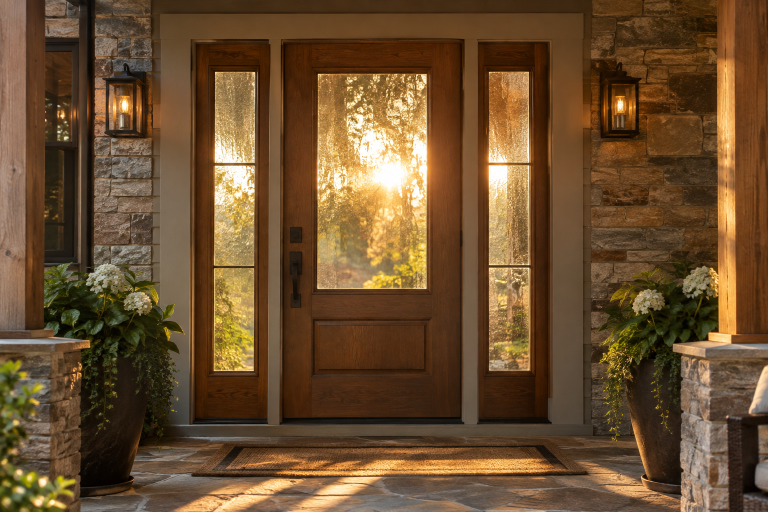
A front door with sidelights can make an entry feel brighter, more open, and more intentional without changing the home’s basic layout. Whether you are replacing an aging unit or planning a new exterior, reviewing examples of a 36×80 door with sidelights can help you picture how the door panel and surrounding glass work together as one complete entry system.
The best configuration is not necessarily the largest or most decorative one. It should fit the opening, reflect the character of the house, provide an appropriate level of privacy, and perform well in the local climate. Glass, frame construction, hardware, weather protection, and installation all deserve attention before placing an order.
What Are Sidelights?
An architectural sidelight is a narrow window panel positioned beside a door. A home may have one sidelight when space is limited or a matching pair that frames both sides of the entry. Most exterior sidelights are fixed panels rather than operable windows. They differ from transom windows, which are installed above the door and can add height and light.
Why Homeowners Choose Them
Sidelights solve several practical and visual concerns at once. Daylight entering through side glass can reduce the closed-in feeling of a dim entrance. Clear or lightly textured glass can also provide a view of a visitor or package area without opening the door. From the street, the extra vertical elements create a broader visual frame, which can make a simple facade look more finished.
The design range is wide. A minimal entry may use slim panels with plain glass and dark hardware, while a traditional exterior may call for divided panes, decorative glass, substantial trim, and a warmer finish. The goal is to choose details that support the house rather than compete with it.
How To Balance Glass And Privacy
More glass usually means more light, but it can also create clearer sightlines into the home. Consider what is visible from the sidewalk, driveway, nearby street, and neighboring properties during the day and at night when interior lights are on.
- Clear glass provides the most daylight and outward visibility.
- Frosted glass diffuses views while still admitting light.
- Textured glass can obscure detail and add a decorative surface.
- Decorative glass creates a focal point, although its pattern should suit the architecture.
- Partial-height glass can leave the lower area less exposed while retaining some daylight.
- Interior coverings offer adjustable privacy but add cleaning and operating needs.
A simple decision process is to identify the daylight you want, stand outside after dark to assess interior visibility, then choose the glass treatment that meets both privacy and design needs. It is also worth considering whether a close public walkway places the sidelight near regular foot traffic.
Comparing Door Materials
Door material affects appearance, maintenance, and suitability for exposure. There is no universal best choice because the right option depends on the home’s style, local weather, whether the entry is covered or uncovered, and willingness to maintain the finish.
- Wood: Delivers natural grain and a traditional feel. It benefits from a protective finish and routine inspection, especially at a highly exposed entry.
- Fiberglass: Is often chosen for a low-maintenance exterior surface and is available in smooth or wood-grain finishes.
- Steel: Provides a crisp appearance and can be a practical choice for many entry systems. Scratches or damaged coatings should be addressed to help protect the surface.
- Composite constructions: Vary by manufacturer and may combine materials to address insulation, stability, or surface durability.
Matching The Entry To The Home
Proportion often matters more than passing trends. Look at the width of the facade, the scale of porch columns, window muntins, rooflines, and trim before selecting full-height sidelights. On a compact home, one narrow sidelight may feel more balanced than two wide panels. On a larger facade, a double-sidelight arrangement can prevent the front door from appearing undersized.
Modern exteriors often suit simple glass and restrained trim. Traditional, Craftsman, or Colonial-inspired homes may work well with divided lights, stronger casing profiles, or richer finishes. Coordinate the door color and hardware with nearby lighting, brick, stone, siding, and porch details. Repeating one or two finish tones usually creates a more coherent result than adding several unrelated accents.
Energy Performance And Weather Control
Glass is only one part of entry performance. The frame, insulated glass package, weatherstripping, threshold, flashing, and installation quality all influence comfort. When product ratings are available, review U-factor and solar heat gain coefficient alongside the climate where the home is located. The Department of Energy notes that energy-efficient windows, doors, and skylights should be evaluated by climate zone because U-factor and solar heat gain needs vary by location.
Ask how the assembly manages wind-driven rain, whether weatherstripping is continuous around the operating door, and how the threshold meets the porch or landing. An attractive entry will be less satisfying if gaps, poor drainage, or inadequate sealing create drafts or moisture problems.
Security Details To Review
Security should be considered across the complete assembly. Choose a sound frame, properly fitted locking hardware, and glass suited to the entry’s exposure. Review the sidelight’s position relative to the lock so the design does not create an easy reach path to interior hardware. Exterior lighting, a door viewer or camera where appropriate, and a door that closes and latches correctly all support a more secure routine.
No glass style or door material replaces dependable locks, correct installation, and everyday security habits. After installation, verify that the door remains square, the latch engages smoothly, and the weatherstripping contacts evenly around the perimeter.
Measuring And Installation Planning
Measure the rough or finished opening at the top, middle, and bottom for width, then at both sides and the center for height. Record wall depth, hinge side, swing direction, sill condition, and the dimensions of the full door-and-sidelight assembly. Inspect the surrounding trim and framing for moisture damage or movement before ordering.
Professional verification is especially valuable for older homes, masonry openings, custom trim, transoms, or any project that changes the opening. A well-made entry system can still develop air leaks, sticking, uneven reveals, or water intrusion when it is installed out of level, out of plumb, or without proper flashing. Planning carefully before purchase helps the finished entrance look welcoming and work reliably for years.