You can cut jet lag down by shifting your sleep a little before you leave, staying on destination time during the flight and getting daylight as soon as you land. Jet lag cannot be fully prevented, but the NHS says it usually gets better within a few days as your body clock adjusts. The plan below helps those days go more smoothly.
Table Of Content
What Jet Lag Is and Why Direction Matters
Jet lag happens when your body clock is still set to home time while the clock on the wall says something else. The CDC’s Yellow Book, the US health agency’s guide for travel medicine, describes it as a problem after crossing at least two time zones. Common signs include poor sleep at night, sleepiness during the day, trouble concentrating, a general unwell feeling and an upset stomach.
The direction of travel makes a real difference. According to the CDC, people adjust at an average of about 1 hour per day after flying east and about 1.5 hours per day after flying west. Most people find it easier to stay up later than to fall asleep earlier, which is why a flight from New York to London usually feels harder than the return trip.
| Flying east | Flying west | |
|---|---|---|
| Average adjustment (CDC) | About 1 hour per day | About 1.5 hours per day |
| Shift your bedtime before leaving | Earlier | Later |
| Daylight after arrival | Late morning and early afternoon | Late afternoon and early evening |
| What usually feels hard | Falling asleep at night | Waking very early |
The daylight timing in the table is a general guide. If the time difference is very large, the best hours for light can change over the first few days, so treat it as a starting point.
Start Shifting Your Sleep a Few Days Before
Moving your bedtime by about an hour a day for two or three days before you fly gives your body a head start. The CDC suggests this approach, and the NHS gives similar advice: go to bed and get up earlier or later than usual, closer to the hours you will keep at your destination.
For an eastbound trip, go to bed an hour earlier each night and get up an hour earlier. For a westbound trip, do the opposite. Even a partial shift helps, and it is better than arriving after a run of late nights spent packing. Get plenty of rest in the days before you go.
Use the Flight to Move Onto Local Time
Set your watch or phone to destination time when you board, then eat and sleep as if you were already there. If it is night at your destination, try to sleep. If it is daytime there, try to stay awake, even if the cabin lights are dimmed.
The NHS recommends a few simple habits for the flight itself:
- Drink plenty of water.
- Keep caffeine and alcohol low, as both can make jet lag worse.
- Stretch in your seat and walk up and down the aisle from time to time.
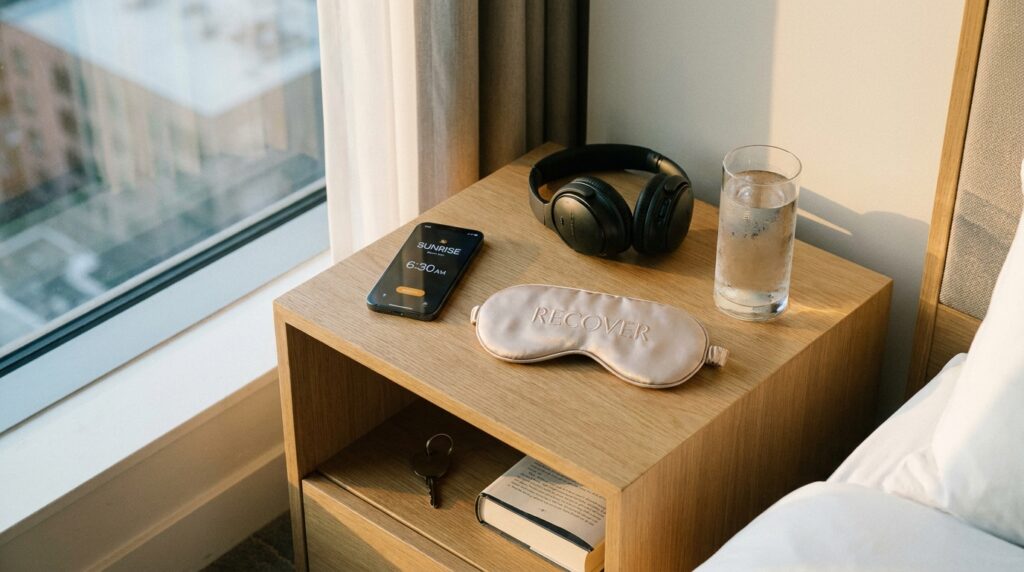
- Use an eye mask and earplugs if they help you sleep.
Pack the eye mask and earplugs in the bag you keep at your seat, so you are not searching the overhead locker when the lights go down.
Get Daylight as Soon as You Arrive
Natural daylight is the strongest signal your body clock has, so spend time outside during the day after you land. The NHS says light helps your body clock adjust, and the CDC also points to timed light as one of the main non-medicine tools.
A walk through the neighbourhood, a meal at an outdoor table or an hour in a park all count. On the first day, plan easy activities in the open air rather than a long museum visit in a dim building. In the evening, keep screens and bright lights low as your new bedtime approaches.
On arrival day, stay awake until a normal local bedtime if you can, and get outside in daylight for at least part of the afternoon.
Keep Naps Short and Caffeine Early
If you cannot stay awake, take a short nap of 20 to 30 minutes, which the CDC gives as the limit for daytime naps while adjusting. Set an alarm. A long sleep in the afternoon makes it much harder to sleep at night, and the NHS advises sleeping only at night once you arrive and setting an alarm so you do not oversleep in the morning.
Caffeine can help you stay alert during the local daytime. The CDC mentions using it at the right time of day, and the practical rule is to keep coffee and tea to the morning and early afternoon. A cup late in the day can keep you awake just when you want to fall asleep.
Eat Meals on the New Schedule
Eating breakfast, lunch and dinner at local times gives your day a clear shape and stops you snacking at odd hours because your body thinks it is mealtime at home. Keep the first evening meal light if your stomach feels unsettled. Water through the day helps too, especially after a long, dry flight.
On a Short Trip, You May Stay on Home Time
For a trip of only two or three days, it can make sense to keep your home schedule instead of adjusting at all. The NHS suggests this for short trips, and the CDC says the same when adjusting would bring little benefit. You avoid having to reset your clock twice in less than a week.
This works best when the time difference is small or when your meetings or plans fit around your usual waking hours. If a short trip means being sharp at a time that is the middle of the night at home, shifting partly toward local time may suit you better.
When to Talk to a Doctor
Speak to a doctor or pharmacist before you travel if you take medicine at set times of day, such as insulin or contraceptive pills, because a big time change can affect when you should take them. They can help you plan the timing across time zones.
Talk to a doctor too if sleep problems carry on long after you return home, or if you travel often and jet lag regularly affects your work or health. For most trips, the steps above are enough: a small shift before you go, local time on the plane, and daylight on the day you land.