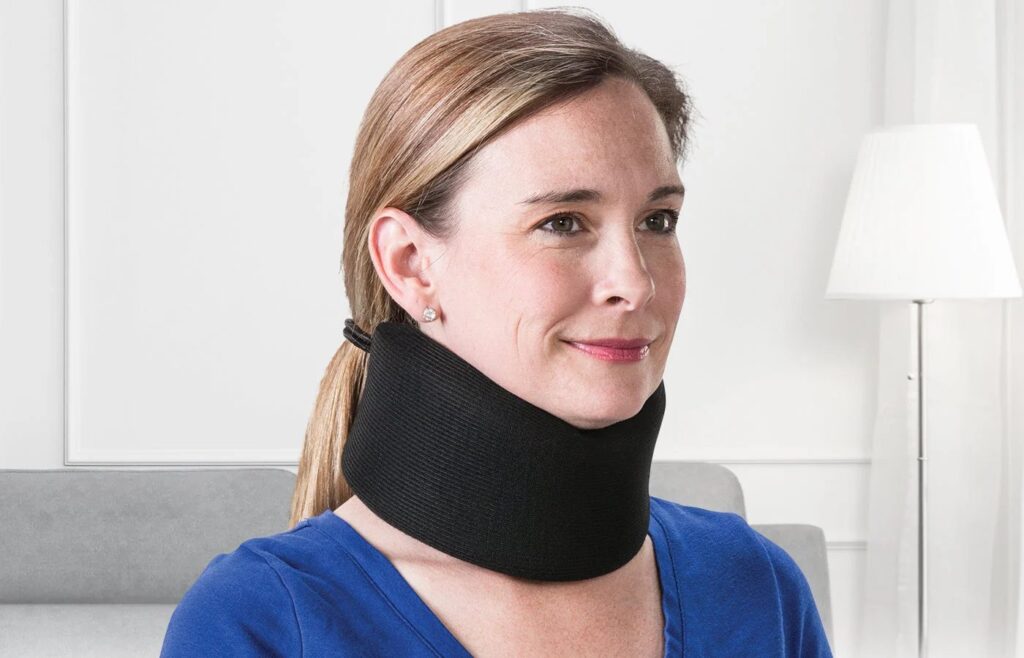
Neck pain can occur due to multiple factors whether it be stress, age related issues or recent injury. While recovering from it, you must have heard about the neck belt.
Table Of Content
- What Are Soft Cervical Collars?
- Key Features of a soft cervical collar
- How They Work
- Common Uses of Soft Cervical Collar
- Limitations of a soft cervical collar
- What Are Hard Cervical Collars?
- Key features of a hard cervical collar
- How They Work
- Common Uses of Hard Cervical Collar
- Limitations of hard cervical collars
- Key Difference At A Glance
- Which One Should You Choose?
- A doctor will choose a soft collar if
- A doctor will choose a hard collar if
- Conclusion
You might have noticed that the supportive aid around the neck might look similar but have different purposes to serve.
Using a soft foamy neck collar providing mild support or a medical grade hard collar for immobility completely depends on the severity of the issue.
Thus, it becomes apparent to understand the different types of the neck collar and their use accordingly.
This guide will help you understand the features that sets them apart from each other.
Let’s explore!
What Are Soft Cervical Collars?
Soft cervical collars are flexible neck braces which are lightweight. It is made up of dense foam and fabric lining.
They are designed primarily to provide comfort and a gentle reminder to the brain. They are not much restrictive as compared to medical grade braces.
Key Features of a soft cervical collar
-
Material
They are typically made from high density PU or contoured foam which is wrapped in a soft washable cotton knit lining.
-
Contoured Fit
Most designs have an anatomical curve at the front for comfortable fit.
-
Fastening
They wrap around the neck and fasten securely at the back using a velcro strap giving it a personalized fit.
-
Thick Rounded Edges
The borders are made with rounded overlock stitching to comfortable wear around the collarbone and lower jaw.
How They Work
-
Brain Awareness
The physical sense of the foam against the chin and jaw acts as a constant reminder of head positioning. It helps to avoid sharp and sudden bends.
-
Mild Load Sharing
By supporting a small portion of the weight of your head under the jaw, they take a fraction of the structural workload off your tired neck muscles.
-
Warmth and Compression
The snug fabric wrap helps retain body heat along with mild compression, which can soothe ache and improve blood circulation to the area.
Common Uses of Soft Cervical Collar
Doctors recommend its use only for short time in non-emergency situations, such as:
-
Chronic Muscular Pain
Easing acute flare-ups of postural fatigue or mild cervical spondylosis.
-
Minor Sprains and Strains
Relieving pain from pulled neck muscles or ligament overstretching.
-
Transitioning Care
Serving as a temporary step-down support at night or during light activities after a patient transitions out of a rigid hard collar
-
Mild Whiplash
Providing temporary comfort in the days immediately following a minor car or sports impact.
Limitations of a soft cervical collar
While a soft collar provides comfort along with light support, it has significant medical and mechanical limitations. Using it incorrectly or for the wrong injury can delay recovery.
It mainly has limitation as follows:
- Allows Significant Movement
- No restriction against lateral side to side bending or rotation
- Muscle Laziness
- Atrophy from muscle overuse
- No stability for fractures
- Risk of nerve or spinal cord injury
- False sense of security
- Fear from natural movement
- Heat and Moisture Trapping
What Are Hard Cervical Collars?
Hard cervical collars are rigid heavy-duty medical braces. They are designed to completely immobilise the neck and protect the cervical spine from dangerous movement. These are structural orthopedic devices typically made of firm polyethylene shells lined with removable padding.
They are strictly prescribed by healthcare professionals or applied by emergency medical personnel to treat severe, unstable or potentially catastrophic neck injuries.
Key features of a hard cervical collar
-
Mechanical Design
Deep and rigid jaw supports along with an occipital support piece at the back of the head.
-
Rigid Framework
A distinct front and back panel that overlap and lock securely through heavy-duty velcro straps.
-
X-Ray and MRI Compatibility
Constructed metal free components so that they can undergo diagnostic X-rays or MRIs.
-
Breathing tube hole
A large cut-out window in the front panel to allow emergency breathing assistance.
How They Work
-
Flexion & Extension
Prevents the head from bowing forward or tilting backward.
-
Lateral Bending
Prevents the ears from tilting toward the shoulders.
-
Axial Rotation
Blocks the head from shaking or turning side-to-side.
Common Uses of Hard Cervical Collar
-
Severe Radiculopathy
Temporarily used to eliminate all motion when a collapsed spinal disc is severely pinching a nerve root.
-
Cervical Dislocations
Used to keep broken and misaligned vertebrae well supported for healing.
-
Emergency Trauma Stabilization
Applied immediately by paramedics at the scene of car accidents, severe falls, or diving impacts to protect the spinal cord until structural damage is ruled out.
-
Post-Surgical Protection
Prescribed following major neck surgeries, such as an anterior cervical discectomy and fusion, to protect the spinal implants and allow the bones to successfully fuse together.
Limitations of hard cervical collars
- Deconditioning of the surrounding muscles
- Contractures
- Intense Friction Points
- High-Risk Zones
- Jugular Vein Compression
- Brain Swelling Risk
- Swallowing Issues
- Airway Restriction
- Jaw Joint Strain
- Localized headaches
Key Difference At A Glance
| FEATURE | Soft Cervical Collar | Hard Cervical Collar |
| Material | Polyurethane foam covered in breathable cotton | Rigid polyethylene or hard plastic with foam lining |
| Level of Support | Mild | High |
| Neck Movement | Partially restricted | Fully restricted |
| Primary Purpose |
|
|
| Comfort | High | Moderate |
| Wear Time | Short time use | Strict medical schedules |
| Weight | Lightweight | Heavier |
Which One Should You Choose?
This decision should strictly be guided by a healthcare provider, particularly after any injury.
A doctor will choose a soft collar if
your spine is structurally stable but your neck muscles or ligaments need temporary rest and relief from movement. To provide comfort, retain therapeutic body heat, and offer a gentle physical reminder to avoid sharp, sudden movements while your muscles heal. It can be used in cases of:
- Minor whiplash
- Acute neck muscle strains
- Postural fatigue
- Mild degenerative disc disease
A doctor will choose a hard collar if
There is a risk that your spinal column is structurally unstable or compromised. It is further used to mechanically lock the neck, preventing every movement to protect the spinal cord from injury. It can be observed in cases of
- Major trauma
- Neck fractures
- Spinal dislocations
- Immediate recovery following surgeries
Conclusion
A soft and hard cervical collar may look like different variations of the same product, but they are actually built differently for distinct jobs. Soft collars offer light support and comfort for minor strains and chronic flare-ups, while hard collars provide the rigid immobilization necessary to protect against serious spinal injury.
Choosing the right one isn’t just about comfort but rather a matter of protection and support of the spinal cord. When in doubt, especially after any injury, it’s best to seek medical guidance to decide which type of collar is best fit according to your needs.