Table Of Content
- Table Of Contents
- Why Skyline Days Need a Simple Plan
- Choose the Right Type of View
- Build a Route by Neighborhood
- Pick the Best Time of Day
- Morning
- Midday
- Late Afternoon and Evening
- Plan Walking and Transit Time
- Prepare for Weather Changes
- Include Accessibility From the Start
- Sample One-Day Skyline Itinerary
- Common Planning Mistakes to Avoid
- Final Planning Checklist
- Conclusion
Table Of Contents
- Why Skyline Days Need a Simple Plan
- Choose the Right Type of View
- Build a Route by Neighborhood
- Pick the Best Time of Day
- Plan Walking and Transit Time
- Prepare for Weather Changes
- Include Accessibility From the Start
- Sample One-Day Skyline Itinerary
- Common Planning Mistakes to Avoid
- Final Planning Checklist
- Conclusion
New York City rewards travelers who slow down enough to notice it. A memorable Manhattan skyline day is less about collecting every famous viewpoint and more about pairing one standout view with a neighborhood walk, an unhurried meal, and time to absorb the streets in between. If your group is looking for family events in Manhattan, a skyline-centered plan can also provide a simple structure for building the rest of the day around one central area.
The practical rule is simple: choose one main view, add two nearby stops, plan one meal, and leave open time. That approach makes room for subway delays, photo breaks, restrooms, changing weather, and the small discoveries that make Manhattan feel personal rather than rushed.
Why Skyline Days Need a Simple Plan
Manhattan distances can appear short on a map, but a few blocks may involve crowded sidewalks, multiple traffic lights, construction detours, or a long walk through a subway station. Timed-entry lines, security procedures, snack stops, and finding the right station exit can reshape a tightly planned schedule. Rather than trying to visit several major observation points in one day, make one view the centerpiece and let the neighborhood around it supply the rest of the experience.
A flexible plan is not an incomplete plan. It is a way to preserve energy for a quiet side street, a park bench, an interesting storefront, or an unplanned coffee break. Build in at least 15 to 30 minutes between any timed commitments, particularly when a subway transfer is involved.
Choose the Right Type of View
No single Manhattan viewpoint suits every visitor. Think first about what you want to remember, photograph, or experience together.
- Elevated views help show the scale of the city, with rivers, bridges, parks, and dense building patterns visible at once.
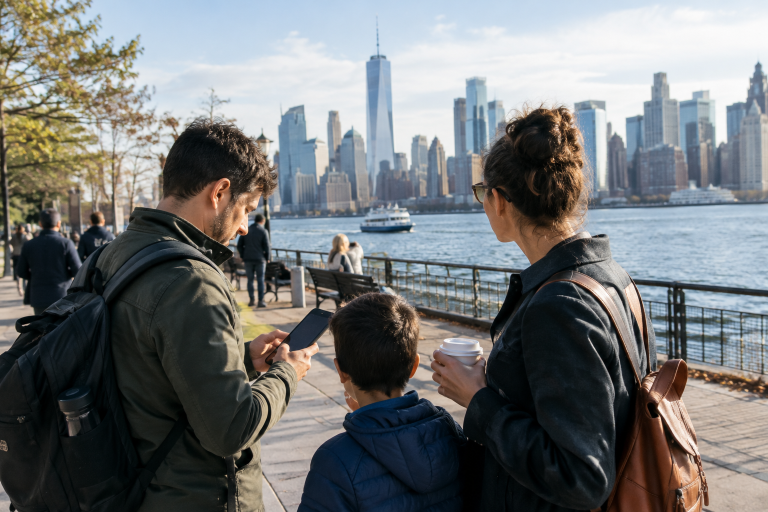
- Waterfront views offer wider skyline compositions and a calmer contrast to busy avenues.
- Bridge walks suit visitors who enjoy movement, architecture, and a scene that changes with every block.
- Street-level views are best for looking up at facades, public art, historic details, and neighborhood life.
- Park views give families, older travelers, and anyone needing regular seating a more comfortable pace.
Build a Route by Neighborhood
Start with the main skyline experience, then choose food and activities within the same broad area. Longer rides can be worthwhile when they lead to a clearly different setting, but avoid crossing the city repeatedly just to check landmarks off a list.
- Midtown: Pair a high-rise view or architecture stop with Bryant Park, the New York Public Library area, or a relaxed walk toward Fifth Avenue.
- Lower Manhattan: Focus on waterfront scenery, civic architecture, and the changing streets around the Financial District, Seaport, or Battery area.
- Brooklyn-facing route: Combine a Lower Manhattan stop with a bridge or waterfront walk, allowing enough time to enjoy the skyline from across the East River.
- Upper West Side: Build a quieter day around Central Park edges, Riverside scenery, museums, and cafés with places to sit.
Pick the Best Time of Day
Morning
Morning can be a comfortable choice for travelers who prefer cooler temperatures, lighter foot traffic, and a clear first priority before the day becomes busy. It works especially well for architecture walks and families that want a dependable start.
Midday
Midday light can reveal building detail, but it may also bring glare, heat, and denser crowds. Use this portion of the day for lunch, an indoor museum or gallery, a library visit, or a longer break before heading back outside.
Late Afternoon and Evening
Late afternoon creates a natural shift from daylight to illuminated windows and streets. It can be an appealing time for photos, but it is wise to keep dinner and your route home nearby so the day does not end with an unnecessary cross-town trip.
Plan Walking and Transit Time
Save directions before entering the subway, carry a portable charger, and check service information before relying on a major transfer. Station entrances and exits are not always where visitors expect them to be. Travelers who need step-free access should review the MTA’s accessible-station and elevator information before committing to a route, then allow extra time in case maintenance changes the easiest path.
Prepare for Weather Changes
Visibility and comfort can change quickly with wind, rain, haze, heat, cold, or poor air quality. Check the forecast the evening before and again before leaving, using the New York forecast from the National Weather Service to guide clothing and timing. Comfortable shoes, water, sunglasses, light layers, and compact rain protection are useful throughout the year. Keep an indoor backup nearby, such as a museum, library, gallery, or covered market. Cloudy conditions can still create soft, atmospheric photographs.
Include Accessibility From the Start
Accessibility works best when it shapes the itinerary rather than being added afterward. Confirm step-free entrances, elevators, restrooms, seating, walking distances, and the likely time spent standing in lines. Plan rest stops near cafés, parks, or indoor venues, and choose fewer destinations when traveling with young children, older adults, or anyone with limited mobility. Construction and maintenance can affect access, so check details close to the visit.
Sample One-Day Skyline Itinerary
- Morning: Have breakfast near your chosen neighborhood, then take a short architecture or park walk.
- Late morning: Visit the main skyline viewpoint while everyone has energy.
- Early afternoon: Eat lunch and take an indoor rest break.
- Mid-afternoon: Choose one nearby cultural, historic, or public-space stop.
- Late afternoon: Recheck weather, transit, and crowd conditions before deciding how long to stay outside.
- Evening: Finish with a waterfront walk, park stop, second street-level view, or an easy nearby dinner.
Families may favor parks and shorter walks. Couples can extend the evening portion with dinner nearby. Photographers may reserve open time for changing light, while repeat visitors can skip major attractions and focus on one unfamiliar neighborhood. With only a few hours, keep the plan to one view, one meal, and one walk.
Common Planning Mistakes to Avoid
- Trying to fit several distant observation points into one day.
- Booking a sunset activity without checking conditions again.
- Underestimating walking, transfers, and station exits.
- Leaving no time for meals, restrooms, or delays.
- Carrying more gear than is comfortable for a full day on foot.
- Scheduling every minute instead of leaving room for spontaneous stops.
Final Planning Checklist
- Choose one main skyline experience.
- Group nearby activities by neighborhood.
- Confirm timed reservations and operating details.
- Check weather, visibility, transit, and elevator conditions.
- Wear supportive shoes and bring water, phone power, layers, and rain protection.
- Keep one indoor backup and one flexible block in the schedule.
Conclusion
A better Manhattan skyline day does not require a packed itinerary. One well-chosen view, a walkable neighborhood route, realistic travel time, and a flexible backup plan can turn a busy New York day into a calmer experience with room to notice the city.