Most people can tell you roughly how many drinks they had last night. Far fewer can tell you how much alcohol those drinks actually contained. A pint of strong craft beer, a large glass of wine and a single shot of spirits can look very different, yet their alcohol content may be surprisingly similar, or wildly different, depending on the strength and size.
Table Of Content
- Step 1: Find the ABV
- Step 2: Check the Serving Size
- Step 3: Work Out the Units or Standard Drinks
- UK Units
- US Standard Drinks
- Quick Tips for Reading Labels Accurately
- How the Numbers Compare to Official Advice
- When the Numbers Are Higher Than You Thought
- Final Thoughts
- Frequently Asked Questions (FAQs)
- 1. What does ABV mean on an alcohol label?
- 2. How do I calculate UK alcohol units?
- 3. What is a standard drink in the United States?
Knowing how to read an alcohol label is one of the simplest ways to understand your own drinking. It matters even more now that official advice is shifting. In January 2026, the 2025 to 2030 Dietary Guidelines for Americans dropped specific daily limits and simply advised people to consume less alcohol. That makes personal awareness more important than ever, whether you are cutting back on your own, talking to a doctor, or exploring support that ranges from counselling to evolving options including GLP-1 addiction treatment research. Here is how to make sense of the numbers on the bottle.
Step 1: Find the ABV
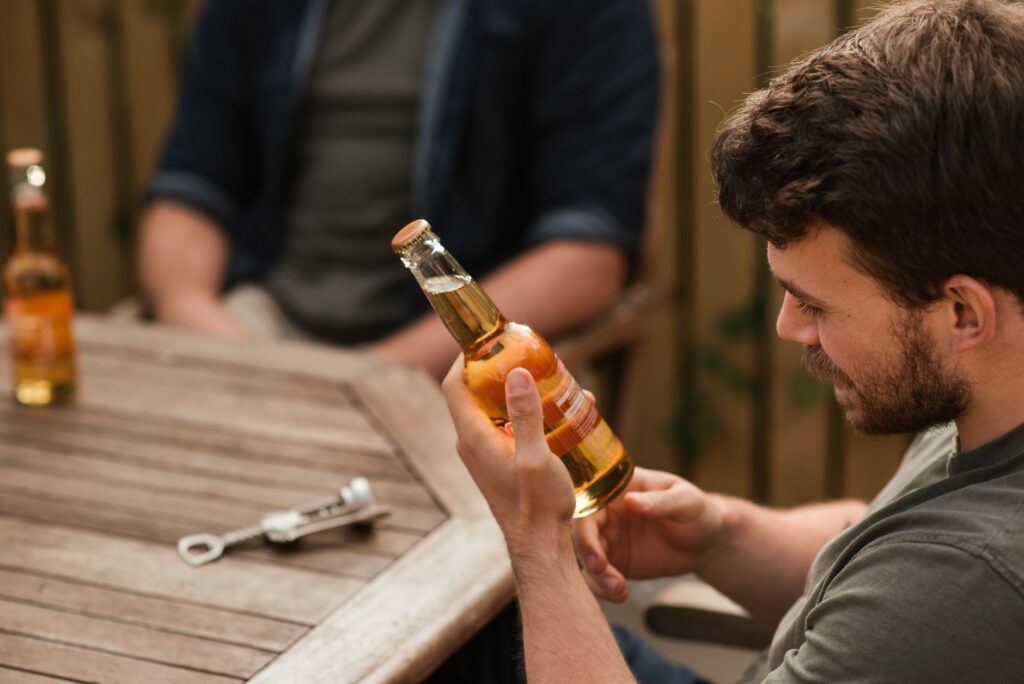
ABV stands for alcohol by volume. It tells you what percentage of the drink is pure alcohol. A beer labelled 5% ABV is 5% alcohol, and a spirit labelled 40% ABV is 40% alcohol. The higher the ABV, the stronger the drink.
ABV varies a lot within each type of drink. Some beers are below 4%, while strong craft beers can be 8% or more. Wines often range from around 11% to 14%. This is why the drink type alone does not tell you how much alcohol you are getting.
Step 2: Check the Serving Size
The next number to notice is volume. A small glass of wine and a large glass of the same wine contain very different amounts of alcohol. Bars and restaurants may serve larger portions than you would pour at home, so it helps to know the size of what you are drinking.
Step 3: Work Out the Units or Standard Drinks
Different countries measure alcohol in different ways. Here are the two most common systems.
UK Units
In the UK, alcohol is measured in units. According to the NHS, one unit is 10 millilitres, or 8 grams, of pure alcohol. To work out how many units are in a drink, multiply the ABV by the volume in millilitres and divide by 1,000. For example, a pint (568 ml) of 4% beer is about 2.3 units, a 175 ml glass of 12% wine is about 2.1 units, and a 25 ml shot of 40% spirits is 1 unit.
US Standard Drinks
In the United States, the National Institute on Alcohol Abuse and Alcoholism defines a standard drink as containing about 14 grams of pure alcohol. That is roughly 12 ounces of regular beer at 5%, 5 ounces of wine at 12%, or 1.5 ounces of spirits at 40%.
Quick Tips for Reading Labels Accurately
Once you know the basics, a few habits make it much easier to keep track of what you are drinking.
- Read the ABV every time. Two bottles of the same type of drink can have very different strengths. Checking the label takes seconds and prevents surprises.
- Look for unit information on UK labels. Many UK drinks show units per serving or per container on the label, which saves you from doing the maths yourself.
- Measure at home. Using a measuring jigger for spirits or a marked wine glass makes it easier to know how much you are actually pouring.
- Count cocktails carefully. Mixed drinks can contain several types of alcohol. A single cocktail may contain more than one unit or standard drink.
- Keep a simple tally. Writing down what you drink over a week, using units or standard drinks, gives you a far clearer picture than relying on memory.
These small steps turn vague guesses into real numbers, which makes it much easier to make informed decisions.
How the Numbers Compare to Official Advice
In the UK, the Chief Medical Officers advise that, to keep health risks low, it is safest not to regularly drink more than 14 units a week, spread over three or more days. In the United States, the 2025 to 2030 Dietary Guidelines advise consuming less alcohol without giving a specific daily number. The World Health Organization has stated that no level of alcohol consumption is safe for health.
When the Numbers Are Higher Than You Thought
If tracking your drinking shows you are regularly drinking more than you intended, or you find it hard to cut back, it may be worth speaking to a doctor. If you drink heavily every day, get medical advice before stopping suddenly, because alcohol withdrawal can be dangerous.
Final Thoughts
Reading an alcohol label is a small skill with a big payoff. By checking the ABV, noticing the serving size and working out units or standard drinks, you can see exactly how much alcohol you are consuming. That clarity makes it easier to drink less, stay within guidance, or decide when it is time to ask for help.
Frequently Asked Questions (FAQs)
1. What does ABV mean on an alcohol label?
ABV stands for alcohol by volume. It shows the percentage of the drink that is pure alcohol. A 5% ABV beer is 5% alcohol, while a 40% ABV spirit is 40% alcohol.
2. How do I calculate UK alcohol units?
Multiply the ABV by the volume in millilitres, then divide by 1,000. For example, a 175 ml glass of 12% wine contains about 2.1 units.
3. What is a standard drink in the United States?
According to NIAAA, a US standard drink contains about 14 grams of pure alcohol, roughly 12 ounces of 5% beer, 5 ounces of 12% wine or 1.5 ounces of 40% spirits.