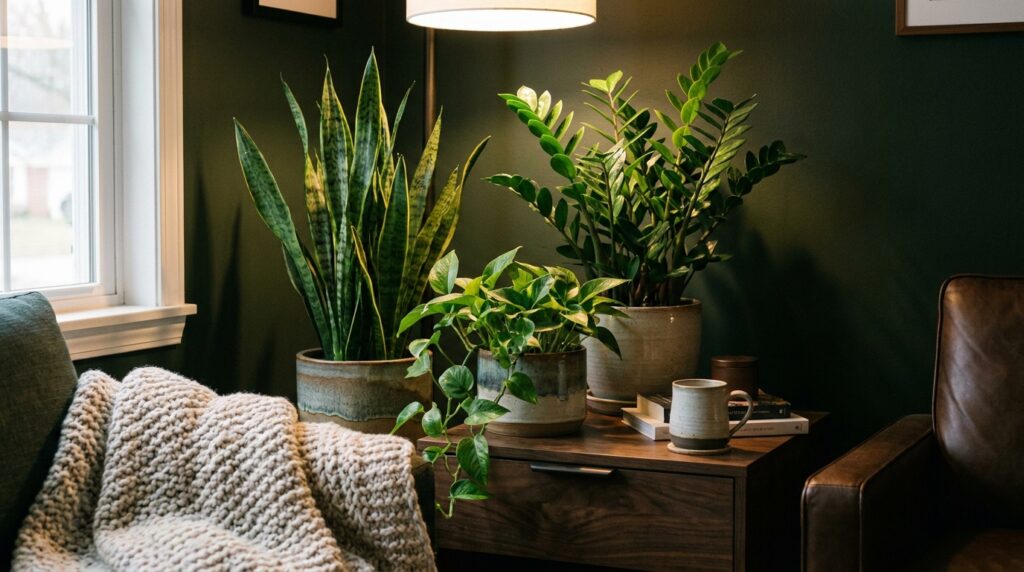
The best indoor plants for low light are tough, leafy plants that grow slowly in shade, such as the ZZ plant, the snake plant, the cast iron plant, pothos, the peace lily and the parlour palm. “Low light” still means some daylight, though. Every plant needs light to grow, and a windowless room will only suit a plant if you add a grow light.
Table Of Content
What Counts as Low Light
Low light usually means a spot with no direct sun that sits some distance from a window, such as a north-facing room in the northern hemisphere, a hallway or a corner across the room from the glass.
A simple way to check is the shadow test. Put a sheet of white paper where the plant will go and hold your hand about 30 cm (1 ft) above it during the day. A sharp shadow means bright light, and a fuzzy but clear hand shape means medium light. A faint shadow where you can’t make out your fingers means low light. If there is no shadow at all, the spot is too dark for most plants except for short visits.
Plants grow more slowly in low light, and that’s normal. Leaves that are pale, heavily variegated or brightly patterned usually need more light than plain dark green ones, so a variegated variety may lose some of its markings in a dim corner.
Six Plants That Cope With Low Light
These plants are widely recommended by gardening and university extension services for shady rooms. The last column shows pet safety, based on the ASPCA’s plant lists and, for the ZZ plant, North Carolina State University Extension, because several shade-tolerant plants are not safe for cats and dogs.
| Plant | Botanical name | Watering | Safe for cats and dogs? |
|---|---|---|---|
| ZZ plant | Zamioculcas zamiifolia | Let the soil dry out completely between waterings | No |
| Snake plant | Dracaena trifasciata (formerly Sansevieria) | Water sparingly, once the soil is dry | No |
| Cast iron plant | Aspidistra elatior | Water when the top of the soil feels dry | Yes |
| Pothos | Epipremnum aureum | Water when the top of the soil feels dry | No |
| Peace lily | Spathiphyllum | Keep lightly moist | No |
| Parlour palm | Chamaedorea elegans | Water when the top of the soil feels dry | Yes |
ZZ Plant
The ZZ plant has upright stems of glossy, dark green leaves and grows from thick underground rhizomes that store water. That makes it one of the most forgiving plants for a dim room and a forgetful owner. NC State Extension notes that it can survive very low light but does best in bright, indirect light, and that direct sun can scorch the leaves.
Snake Plant
Snake plants have stiff, upright, sword-shaped leaves and cope with low light better than most houseplants, though they grow fastest in brighter spots. Botanists moved them from the genus Sansevieria to Dracaena in 2017, so you may see either name on the label. They need very little water, and soggy soil leads to root rot.
Cast Iron Plant
The cast iron plant, or aspidistra, got its common name by surviving shade and neglect. The Royal Horticultural Society calls it one of the easiest houseplants and suggests a spot in low light or shade, out of direct sun. Its broad, dark leaves form a clump about 60 cm (2 ft) tall and wide, and it is on the ASPCA’s non-toxic list for cats and dogs.
Pothos
Pothos, also called devil’s ivy, is a trailing plant that suits a shelf or a hanging pot. It copes with low light but grows faster in moderate, indirect light. Plain green types handle shade better than the heavily marbled ones, and stem cuttings root easily in a glass of water.
Peace Lily
The peace lily has glossy leaves and white, sail-shaped flowers. It tolerates low light, though it flowers more in a brighter spot. It is also easy to read: the leaves droop when the plant is thirsty and lift again after watering.
Parlour Palm
The parlour palm is a small, slow-growing palm with feathery fronds. It prefers bright, indirect light but manages in shadier spots, and the ASPCA lists it as non-toxic to cats and dogs.
How to Water Plants in Low Light
Plants in low light use water slowly, so their soil stays wet for longer. The University of Maryland Extension calls overwatering the number one killer of houseplants, because waterlogged soil starves the roots of air. Push a finger into the soil before you water, and only water when the top few centimetres feel dry.
Use pots with drainage holes, and empty the saucer after watering so the roots don’t sit in water. Water less in winter, when shorter days slow growth even further.
Check the soil, not the calendar. Watering on a fixed weekly schedule is the quickest way to drown a plant that lives in a dim corner.
Simple Care Tips for Shady Rooms
A few small habits keep low-light plants looking healthy:
- Wipe dust off the leaves with a damp cloth every few weeks, so they can use what light they get.
- Turn the pot a quarter turn now and then, so the plant doesn’t lean towards the window.
- Feed lightly in spring and summer only, and less often than you would a plant in bright light.
- Move a plant closer to a window for a few weeks if new leaves come out small and pale.
Long, stretched stems with big gaps between the leaves are another sign that a plant needs more light.
Keeping Pets and Children Safe
Several popular low-light plants, including pothos, snake plants and peace lilies, are listed by the ASPCA as toxic to cats and dogs. Pothos and peace lilies contain calcium oxalate crystals, which can cause mouth irritation, drooling and vomiting if chewed, and NC State Extension lists the ZZ plant as a medium-severity risk for the same reason. If you have pets or small children, choose the cast iron plant or the parlour palm, or keep other plants on high shelves out of reach.
If a pet chews a plant and seems unwell, contact your vet straight away and have the plant’s name ready. If a child eats part of a plant, call your doctor or your local poison advice service.