The fastest way to organise a small kitchen is to clear out what you don’t use, store the rest according to how often you reach for it, and make use of the wall and cupboard height that usually goes to waste. None of this needs a renovation. A free weekend and a few shelves, hooks or containers are enough for most kitchens.
Table Of Content
Start by Clearing Everything Out
Organising begins with owning less. Take everything out of one cupboard or drawer at a time, wipe the shelf and sort the contents into four piles: keep, move to another room, give away, and throw away or recycle.
Be honest about duplicates. Small kitchens often hold three spatulas, two sets of measuring cups and a mug from every workplace you’ve ever had. Keep the ones you actually reach for and pass on the rest.
Check food as you go. Throw out anything past its use-by date, and group opened packets together so you can see what needs using up first.
If you can’t decide about a gadget, put it in a box and write the date on the lid. Anything you haven’t taken out after a few months can probably go.
Set Up Zones Around How You Cook
A kitchen works best when things live near the place you use them. Think in zones:
- Prep zone: knives, chopping boards, mixing bowls and measuring tools beside your main stretch of worktop.
- Cooking zone: pans, oils, spatulas and oven gloves near the hob and oven.
- Cleaning zone: washing-up liquid, cloths, bin bags and the drying rack near the sink.
- Food storage zone: dry food, tins and spices together, away from the heat of the oven.
- Serving zone: plates, glasses and cutlery close to the dishwasher or drying rack, so unloading is quick.
Keep the things you use every day between hip and shoulder height. Items you use a few times a year, such as a big roasting tin or a party bowl, can go on the top shelf or in another room.
Use the Height of the Room
Small kitchens usually have more height than floor space. Look up and see which space is going unused:
- Shelf risers double the usable space in a tall cupboard for plates and mugs.
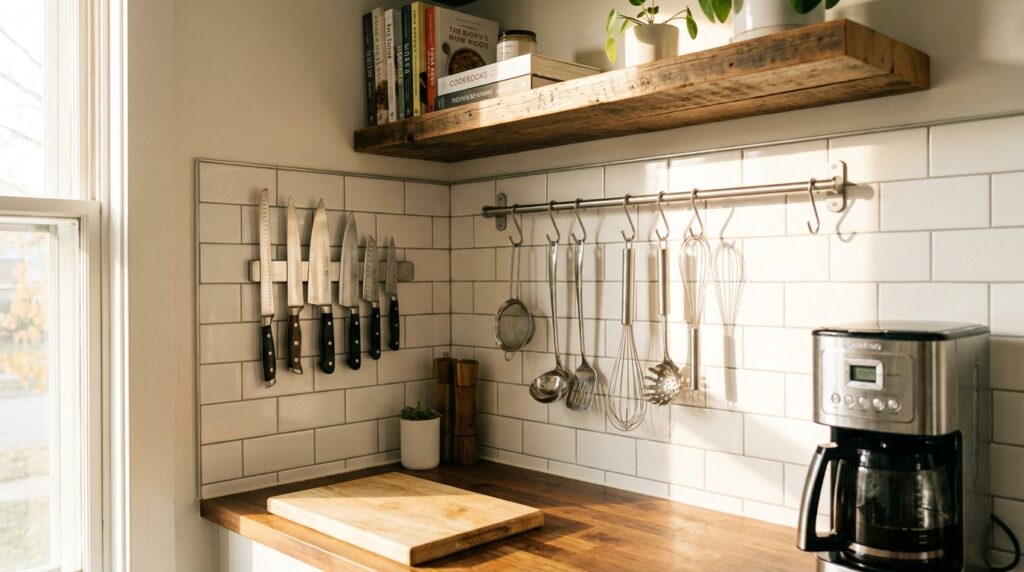
- Hooks or a rail under a shelf or on the wall can hold mugs, utensils or pans.
- A magnetic knife strip frees up a drawer and keeps blades off the worktop.
- Racks that hang over a cupboard door can hold spices, foil and cling film.
- Stackable containers make better use of deep shelves.
Check what your walls are made of and use the right fixings before you hang anything heavy. If you rent, ask your landlord first, or choose freestanding shelves and over-the-door racks that need no drilling.
Keep Worktops as Clear as You Can
Clear worktops make a small kitchen easier to cook in and quicker to clean. Only keep things on the counter that you use every day, such as the kettle or a knife block. The toaster you use once a week can live in a cupboard.
A tray can group daily items such as oil, salt and pepper. They look tidier together, and you can lift the whole tray off in one go when you wipe down.
Sort Out Cupboards and Drawers
Inside cupboards, the aim is to see everything without unpacking the shelf. These fixes work well in small spaces:
| Problem | Simple fix |
|---|---|
| Tins lost at the back | A tiered shelf or a turntable |
| Stacks of lids falling over | File lids upright in a rack or a deep basket |
| A jumbled utensil drawer | Drawer dividers or small boxes |
| Clutter under the sink | Two stacking baskets or a pull-out tub |
| Packets spilling open | Clear airtight containers with labels |
Store pans nested inside each other, with a cloth or pan protector between them to stop scratches. Stand baking trays and chopping boards on their sides, like files, so you can pull one out without lifting the whole pile.
Store Food Safely as Well as Neatly
A tidy kitchen should also keep food safe. When you put shopping away, move older items to the front so they get used first. Label containers with what is inside and the date you opened or made it.
In the fridge, the UK Food Standards Agency advises keeping raw meat and poultry covered and on the bottom shelf, away from ready-to-eat food, so juices can’t drip onto anything else. It also recommends keeping the fridge at 5°C or below. The FSA suggests checking with a fridge thermometer, because the dial on a fridge doesn’t always show the real temperature.
Before buying any organisers, measure the inside of each cupboard and drawer and take the numbers with you to the shop. Containers that don’t fit only add to the clutter.
Make the Most of Awkward Spaces
Almost every small kitchen has corners and gaps that could work harder. The space on top of wall cupboards can hold baskets of rarely used items. A slim rolling trolley can slide into the gap beside the fridge and hold tins, oils or cleaning products. The inside of cupboard doors can take a small rack or a few adhesive hooks.
A deep corner cupboard is easier to use with a turntable or pull-out baskets than as a dark shelf where things disappear. If there is no room for a table, a wall-mounted fold-down shelf gives you an extra worktop when you need one and folds away when you don’t.
Keep It Organised With Small Daily Habits
A kitchen stays organised through small habits rather than big clear-outs. Put things back where they live straight after use, and wipe the worktop at the end of each day. Once a month, go through one cupboard or the fridge and clear out anything old.
A one-in, one-out rule also helps. When a new mug, pan or gadget comes in, an old one goes. In a small kitchen, that keeps the space you have freed from slowly filling up again.