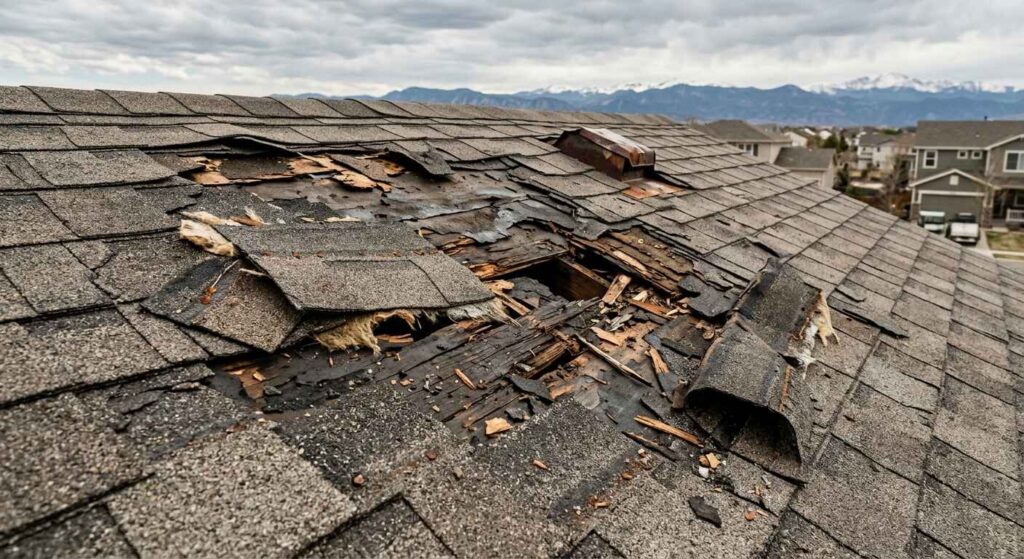
Strong winds can affect a roof without leaving obvious damage from the ground. Some shingles may loosen, others may lift and settle back into place, and a few may break away entirely. Even when a roof looks relatively normal after a storm, damaged shingles can leave parts of the roofing system more vulnerable to rain and moisture.
Table Of Content
- How Wind Damages Roof Shingles
- Wind Uplift and Loose Shingle Tabs
- Missing, Creased, or Cracked Shingles
- Why Roof Edges and Ridge Areas Deserve Attention
- Signs of Wind Damage to Roof Shingles
- Why Denver Homeowners Should Pay Attention After a Windstorm
- What to Do After Wind Blows Shingles Off Your Roof
- Check for Visible Damage From a Safe Location
- Document the Damage
- Arrange a Professional Roof Inspection
- Can Wind-Damaged Roof Shingles Be Repaired, or Do They Need Replacement?
- When a Localized Shingle Repair May Be Appropriate
- When a Broader Roof Assessment Is Necessary
- Does Homeowners Insurance Cover Wind Damage to Roof Shingles?
- When to Contact a Denver Roofing Contractor
- Final Thoughts
- Frequently Asked Questions
- How can I tell if wind has damaged my roof shingles?
- Can lifted shingles cause a roof leak?
- Should missing roof shingles be repaired immediately?
- Does wind damage mean I need a new roof?
- Will homeowners insurance cover wind-damaged shingles?
For homeowners in Denver, Colorado, understanding the signs of wind damage to roof shingles is an important part of maintaining a home. Wind exposure, changing weather conditions, and the existing condition of roofing materials can all influence how a roof performs during a storm. Recognizing potential damage early helps homeowners decide when a professional inspection is warranted and whether a targeted repair may be sufficient.
How Wind Damages Roof Shingles
Asphalt shingles are designed to overlap and work together to shed water. Their performance depends on proper installation, secure fastening, and the condition of the surrounding roofing materials. Strong winds can place pressure on the roof surface, particularly around exposed edges and areas where shingles have already loosened or deteriorated.
Wind Uplift and Loose Shingle Tabs
Wind moving across a roof can create uplift forces that affect shingle edges. If a shingle is poorly fastened, aged, damaged, or already beginning to loosen, wind may lift or displace it. Repeated movement can weaken the shingle’s position and increase the possibility of damage during later storms.
Wind-lifted shingles are not always easy to identify from the ground. A shingle may settle back down after the wind passes, even if its seal or fastening has been compromised. A professional roof inspection can help determine whether the shingles remain secure and whether any repair is needed.
Missing, Creased, or Cracked Shingles
One of the more visible signs of wind damage is a missing shingle. Homeowners may also notice shingle pieces in the yard or driveway after a storm. Other forms of damage are less obvious. A shingle may become creased, cracked, or displaced without falling completely off the roof.
These conditions matter because shingles provide an important layer of protection against water intrusion. When wind damages the roofing surface, water may reach underlying materials more easily, particularly during wind-driven rain. The extent of the risk depends on the location and severity of the damage and the condition of the surrounding roof.
Why Roof Edges and Ridge Areas Deserve Attention
Roof edges, ridges, and other exposed sections can experience different wind pressures from the main roof surface. The roof’s shape, surrounding buildings, nearby trees, and local wind conditions may influence how forces act on individual sections.
Damage is not necessarily limited to one visible area. After a significant windstorm, a professional assessment should consider the broader roof surface rather than focusing only on the shingles that appear to be missing.
Signs of Wind Damage to Roof Shingles
After a windstorm, homeowners can look for visible clues from the ground without climbing onto the roof. Missing shingles, roofing fragments around the property, and material that appears displaced may indicate a problem. Changes along the roofline can also justify a closer professional assessment.
Interior symptoms may provide additional clues. A new ceiling stain, dampness in an attic, or water appearing after rainfall could indicate that the roof is no longer shedding water effectively. However, these symptoms do not prove that wind-damaged shingles are the cause. Other roofing defects, plumbing problems, and condensation can produce similar signs.
It is also important to distinguish between visible damage and confirmed damage. A few shingles on the ground may have come from another part of the property, while a roof that looks intact may still have loosened shingles. The absence of obvious damage does not guarantee that the roof was unaffected.
If you suspect wind damage to your roof shingles, avoid walking on the roof or attempting to lift shingles for inspection. Roof surfaces can be hazardous, particularly after severe weather. A qualified roofing professional can assess the roof safely and identify whether the damage requires repair.
Why Denver Homeowners Should Pay Attention After a Windstorm
Denver and the surrounding Colorado communities experience changing weather conditions throughout the year. Wind events can occur alongside temperature changes, rain, hail, or periods of snow. These conditions can expose weaknesses in roofing materials that may have developed gradually through age, weather exposure, or previous damage.
For example, shingles that have already begun to loosen may be more susceptible to displacement during a windstorm. A roof with older or deteriorating materials may also respond differently from a newer roof with properly installed shingles. The actual outcome depends on the roof’s design, condition, installation quality, and the wind exposure it experiences.
Homeowners should not assume that every storm causes roof damage, nor should they assume that every missing shingle requires a complete roof replacement. The appropriate response depends on the condition of the roofing system and the extent of the affected area.
Following a significant windstorm in Denver, a timely assessment can help clarify whether the roof remains serviceable, whether a localized repair is needed, or whether more extensive damage should be investigated.
What to Do After Wind Blows Shingles Off Your Roof
Discovering missing shingles can be concerning, particularly if rain is expected. Taking a few sensible steps can help homeowners document the situation and arrange the appropriate response without creating additional safety risks.
Check for Visible Damage From a Safe Location
Look at the roof from the ground or another safe vantage point. Note any visible gaps, displaced materials, debris, or changes along the roofline. Do not use a ladder to reach the roof or attempt to inspect damaged sections yourself.
If water is entering the home, keep people away from affected areas and avoid contact with wet electrical equipment. If the damage appears extensive or there is an immediate safety concern, seek appropriate professional assistance.
Document the Damage
Take photographs of visible roofing debris, interior stains, and any other signs of damage that can be recorded safely. Note when the storm occurred and when you first noticed the problem. If the roof had an existing issue before the storm, keep that information available as well.
This documentation can help a roofing professional understand the situation and may be useful if you decide to contact your insurance company. Photographs alone, however, do not establish the exact cause of damage or guarantee that an insurance claim will be covered.
Arrange a Professional Roof Inspection
A professional inspection can help determine whether shingles are missing, lifted, creased, or otherwise damaged. The assessment may also consider the condition of surrounding shingles and underlying roofing materials where accessible.
Ask the contractor to explain what was found, which areas require attention, and whether the recommended work is limited to a small section or involves a broader part of the roof. A clear explanation makes it easier to understand the repair options before authorizing work.
Can Wind-Damaged Roof Shingles Be Repaired, or Do They Need Replacement?
The right solution depends on the number of affected shingles, the severity of the damage, the condition of nearby materials, and the age and overall performance of the roof.
When a Localized Shingle Repair May Be Appropriate
If the damage is confined to a limited area and the surrounding roofing materials remain in serviceable condition, replacing or repairing the affected shingles may be sufficient. The contractor should confirm that the replacement materials are suitable for the existing roof and that the repair can be completed without compromising the surrounding shingles.
A localized repair may be especially reasonable when the rest of the roof remains in good condition and there is no evidence of widespread deterioration.
When a Broader Roof Assessment Is Necessary
If wind has affected multiple sections, if shingles repeatedly loosen, or if the roof shows widespread aging, a more comprehensive assessment may be appropriate. The contractor may need to evaluate whether the visible damage is isolated or part of a larger problem involving the roofing materials or their installation.
Missing shingles do not automatically mean the entire roof needs replacement. Equally, replacing a few shingles may not be a sufficient solution if other sections are also damaged. The recommendation should reflect the actual condition of the roof rather than a predetermined repair or replacement option.
For homeowners comparing options for Best roof repair in Denver, the useful question is whether the proposed work addresses the identified damage and provides a sound solution for the remaining roof system.
Does Homeowners Insurance Cover Wind Damage to Roof Shingles?
Homeowners insurance may cover certain types of sudden wind-related roof damage, but coverage depends on the specific policy, applicable exclusions, deductibles, and the circumstances surrounding the loss. Wear and tear, deterioration, maintenance issues, and storm-related damage may be treated differently under an individual policy.
If you suspect storm damage, document what you can safely observe and review your policy or contact your insurance company to understand the next steps. A roofing contractor may be able to document visible roof conditions and explain the physical damage identified during an inspection, but the insurer determines coverage under the policy.
Avoid assuming that every missing shingle qualifies for an insurance claim or that filing a claim will necessarily result in payment. It is better to understand the extent of damage, the applicable deductible, and the policy requirements before making decisions based on an expected insurance outcome.
When to Contact a Denver Roofing Contractor
Consider arranging a professional assessment when shingles are missing, roof materials appear displaced, a leak develops after a storm, or you have reason to believe that the roof has sustained damage that cannot be evaluated safely from the ground.
When comparing a Local Denver roofing contractor, ask for a clear explanation of the findings, photographs where available, and a written description of the recommended work. The contractor should explain why the proposed repair is appropriate, whether surrounding materials need attention, and what factors could affect the final scope.
It is also reasonable to ask whether the damage appears localized or whether a wider inspection is warranted. A useful assessment should help you understand the roof’s current condition, not simply recommend the largest possible repair.
Final Thoughts
Wind damage to roof shingles can range from a few displaced shingles to more extensive damage affecting multiple sections of a roof. The most reliable way to determine the right response is to assess the condition of the roofing materials, identify any potential water entry points, and distinguish isolated damage from broader deterioration.
For Denver homeowners, checking for visible signs after a storm and arranging a professional inspection when needed can help clarify the next steps. Prompt attention to confirmed damage may reduce the chance of continued water intrusion, although the appropriate repair depends on the roof’s specific condition.
Homeowners looking for information about roofing services in the Denver area can learn more about HRI Roofing & Construction LLC and its services. The goal is to understand what the roof needs and make a repair decision based on the findings rather than assumptions.
Frequently Asked Questions
How can I tell if wind has damaged my roof shingles?
Visible clues may include missing shingles, roofing debris, displaced shingle edges, or new signs of water intrusion inside the home. Some damage is not apparent from the ground, so a professional inspection may be necessary if you suspect a problem.
Can lifted shingles cause a roof leak?
Yes. If wind compromises the position or seal of a shingle, water may be able to reach underlying roofing materials. Whether a leak develops depends on the extent and location of the damage and the roof’s overall condition.
Should missing roof shingles be repaired immediately?
Missing shingles should be assessed promptly because the exposed area may be more vulnerable to rain and further damage. The appropriate timing and repair method depend on the conditions and the extent of the damage. Avoid climbing onto the roof to make a temporary repair yourself.
Does wind damage mean I need a new roof?
No. Localized wind damage can often be repaired without replacing the entire roof if the surrounding materials remain in good condition. Widespread damage, significant deterioration, or recurring problems may require a broader evaluation.
Will homeowners insurance cover wind-damaged shingles?
Coverage depends on the policy, deductible, exclusions, and the cause of the damage. Review your policy and contact your insurer for guidance. A roofing inspection may help document the visible condition of the roof, but it cannot guarantee claim approval.










1 thought on “Wind Damage to Roof Shingles: What Homeowners Should Know After a Storm”
Comments are closed.