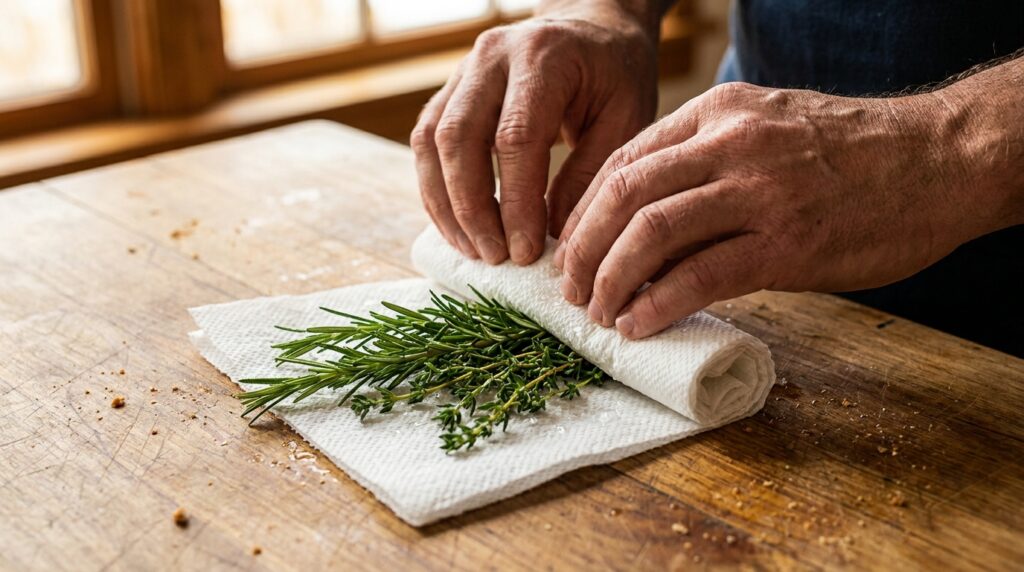
Fresh herbs last longest when you store them according to their type: soft, leafy herbs such as parsley and coriander like water and cold, basil likes room temperature, and woody herbs such as rosemary and thyme like cool, dry air. Bunches left in the supermarket bag often go limp or slimy within days. A few minutes of sorting when you get home makes them last much longer.
Table Of Content
Soft Herbs and Hardy Herbs Need Different Care
Herbs fall into two groups, and the group decides how you store them. Soft herbs have tender stems and delicate leaves that wilt easily. Hardy herbs have woody stems and tougher leaves that hold up well but can go mouldy if kept damp.
| Herb | Type | Best way to store |
|---|---|---|
| Parsley | Soft | Jar of water in the fridge, loosely covered |
| Coriander (cilantro) | Soft | Jar of water in the fridge, loosely covered |
| Dill | Soft | Jar of water or damp paper towel in the fridge |
| Mint | Soft | Jar of water or damp paper towel in the fridge |
| Basil | Soft | Jar of water at room temperature, out of direct sun |
| Rosemary | Hardy | Dry paper towel in an airtight container in the fridge |
| Thyme | Hardy | Dry paper towel in an airtight container in the fridge |
| Sage and oregano | Hardy | Dry paper towel in an airtight container in the fridge |
| Chives | Hardy | Dry paper towel in an airtight container in the fridge |
These methods follow the advice from Love Food Hate Waste, a campaign that helps households throw away less food. They work for most bunches bought from a shop or market.
Store Soft Herbs Like a Bunch of Flowers
Soft herbs such as parsley, coriander, dill and mint keep best upright in a jar of water in the fridge. Trim the ends of the stems first, as you would with cut flowers, so they can take up water.
- Pull off any yellow, slimy or damaged leaves.
- Trim about 1 cm from the bottom of the stems.
- Stand the bunch in a jar with 2 to 5 cm (an inch or two) of water.
- Cover the leaves loosely with a plastic bag or a reusable food bag.
- Put the jar in the fridge and change the water every few days.
If your fridge is short on height, use the paper towel method instead. Wrap the herbs in a slightly damp paper towel, put them in a resealable bag or container, and store them in the salad drawer. The towel should be damp, not wet, as standing water on leaves speeds up rotting.
Keep Basil Out of the Fridge
Basil is the one soft herb that should stay at room temperature, because cold turns its leaves black. Love Food Hate Waste gives the same advice. Treat it like a bunch of flowers: trim the stems, stand it in a glass of water on the kitchen counter and change the water every day or two.
Keep the glass away from direct sunlight, a hot oven and a cold window in winter. If you bought basil as a growing plant in a pot, keep it on a bright windowsill and water it from the bottom when the soil feels dry. Pick the top leaves first and the plant will keep growing new ones.
Store Hardy Herbs Dry
Rosemary, thyme, sage and oregano keep best wrapped loosely in a dry paper towel inside an airtight container or bag in the fridge. These herbs prefer drier conditions and spoil faster when they sit in moisture, so they do not need a jar of water.
Check the bundle every few days and remove any stems that have turned soft or dark. Woody herbs that start to dry out in the fridge are still usable. Strip the leaves into a stew or a tray of roast potatoes, where they will soften as they cook.
Wash herbs just before you use them, not before you store them. Damp leaves sitting in the fridge rot faster.
When to Wash Herbs
Rinse herbs just before you use them rather than when you bring them home. Love Food Hate Waste notes that soft herbs keep for only about 3 to 4 days once they have been washed, so washing early cuts their life short.
If a bunch is very sandy, as parsley and coriander sometimes are, wash it, then dry it fully in a salad spinner or by rolling it gently in a clean tea towel before storing it. The drier the leaves, the longer they last.
Freeze Herbs You Will Not Use in Time
Freezing is the easiest way to save herbs before they go off. Chop the leaves, pack them into an ice cube tray and cover them with water or olive oil, as Love Food Hate Waste suggests. Once frozen, pop the cubes into a labelled freezer bag.
Drop a cube straight into soups, stews, curries and pasta sauces as they cook. Frozen herbs lose their crisp texture, so they are not right for garnishing a plate or a fresh salad, but they keep their flavour well in cooked dishes. Parsley, coriander, dill, chives and basil all freeze well this way.
Hardy herbs can also be frozen whole on the stem. Lay sprigs of rosemary or thyme in a freezer bag, press out the air and freeze. The leaves strip off easily from frozen stems.
Dry Hardy Herbs at Home
Hardy herbs dry well because they hold little water. Tie a small bunch of rosemary, thyme, sage or oregano with string and hang it upside down in a warm, dry, airy spot out of direct sunlight until the leaves crumble easily.
For a quicker method, Love Food Hate Waste suggests laying the leaves between two paper towels and heating them in the microwave on high in 20-second bursts, for 1 to 2 minutes in total, checking each time so they do not scorch. Store dried herbs in a clean, airtight jar away from heat and light.
Signs Your Herbs Have Gone Off
Throw herbs away if the leaves are slimy, black, mouldy or smell sour. Limp but green herbs are still fine to cook with. Stand a wilted bunch of parsley or coriander in a glass of cold water for half an hour and it often perks up enough to use.
Use stems too, rather than throwing them out. Coriander and parsley stems carry a lot of flavour and can be chopped finely into sauces, salsas and stir-fries, or added to a pot of stock.








1 thought on “How to Store Fresh Herbs So They Last Much Longer”