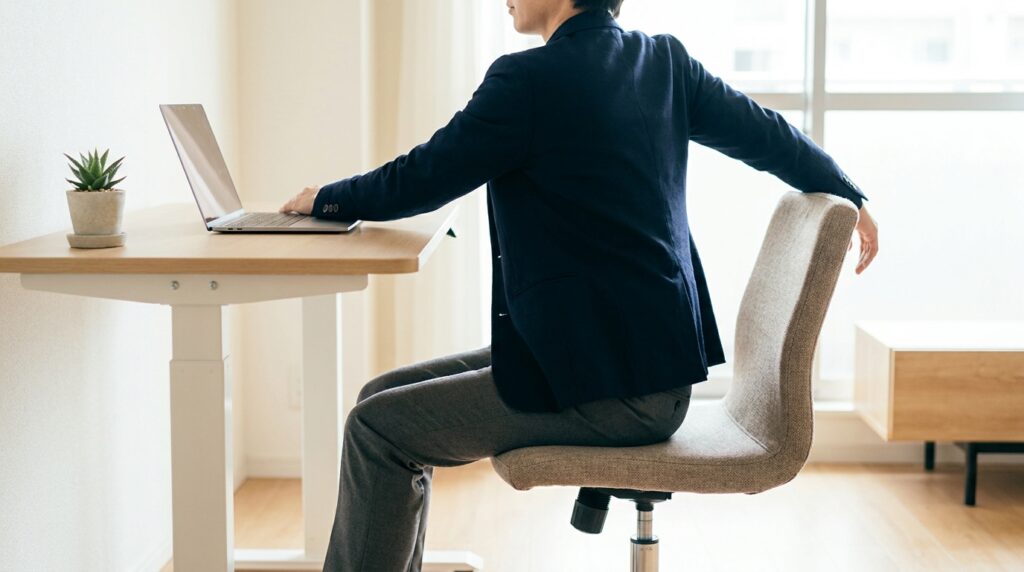
Simple stretches you can do in your chair, plus getting up and moving every so often, are the easiest ways to break up a long day at a desk. The NHS has a set of sitting exercises that need no equipment and take only a few minutes. This guide explains each one step by step and shows how to fit them into a working day.
Table Of Content
Why Breaking Up Sitting Matters
Long, unbroken periods of sitting are something both the NHS and the World Health Organization (WHO) advise people to cut down on. The NHS points out that you can meet your weekly exercise target and still spend too much of the rest of the day sitting still.
Desk work, driving and evenings on the sofa all add up. The NHS notes that many adults spend more than 7 hours a day sitting. Short stretches and regular movement breaks are a simple way to break that time up, and many people find they feel less stiff by the end of the day.
Before You Start
Set up safely before you stretch. The NHS advice for its sitting exercises is to use a solid, stable chair without wheels, sit with your feet flat on the floor and your knees at right angles, and wear loose, comfortable clothing.
An office chair on wheels can move as you stretch, so if that is all you have, lock the wheels or use a fixed chair from a meeting room. Move slowly, breathe normally and stop if anything hurts. A gentle pull is fine. Pain is not.
If you work from home, the same stretches work at a kitchen table, as long as the chair is steady and you have room to stretch your arms out to the sides. Clear the space around you first so you do not knock anything over.
Five Stretches You Can Do at Your Desk
These five stretches come from the NHS sitting exercises. Together they take about five minutes.
Chest stretch
Sit upright, away from the back of the chair. Pull your shoulders back and down, and stretch your arms out to the sides. Gently push your chest forward until you feel a stretch across the front. Hold for 5 to 10 seconds and repeat 5 times. This is a good one to do after a long stretch of typing with your shoulders rounded forward.
Upper-body twist
Sit upright with your feet flat on the floor. Cross your arms and reach for your shoulders. Without moving your hips, turn your upper body to the left as far as is comfortable. Hold for 5 seconds, come back to the centre, then turn to the right. Do 5 on each side.
Neck rotation
Sit upright with your shoulders down. Look straight ahead, then slowly turn your head towards your left shoulder as far as is comfortable. Hold for 5 seconds and return to the centre. Repeat on the right side. Do 3 on each side, keeping the movement slow.
Hip marching
Sit upright and hold the sides of the chair. Lift your left knee as high as is comfortable, keeping it bent, then lower it with control. Repeat with the right leg. Do 5 lifts with each leg. This gets the legs moving when you have been still for a long time.
Ankle stretch
Sit upright, hold the side of the chair and straighten your left leg with your foot off the floor. With the leg straight and raised, point your toes away from you, then back towards you. Do 2 sets of 5 stretches with each foot.
A Simple Daily Plan
Spread short movement breaks through your day instead of doing everything at once. This sample plan fits around a typical office day. Change the times to suit yours.
| When | What to do | Time |
|---|---|---|
| Mid-morning | Chest stretch and upper-body twist | About 2 minutes |
| Before lunch | Stand up, walk to get water or make a drink | About 5 minutes |
| Lunch break | A short walk outside | 10 minutes or more |
| Mid-afternoon | Neck rotation, hip marching and ankle stretch | About 3 minutes |
| End of the day | The full set of five stretches | About 5 minutes |
The NHS suggests doing its sitting exercises at least twice a week. Doing a few of them every day at work is a simple way to go beyond that.
Set a quiet reminder on your computer or phone to stand up once an hour. When it goes off, stand, stretch or walk for a minute or two before you sit back down.
Other Ways to Move More at Work
Stretches help, but getting out of your chair helps too. Small changes to how you work can add more movement to the day without taking extra time.
- Stand up or walk around during phone calls.
- Walk over to speak to a colleague instead of sending a message.
- Use the stairs instead of the lift for a floor or two.
- Have a short walking meeting with one or two people.
- Fill a small glass of water, so you need to get up more often to refill it.
- Use a printer or bin that is a short walk from your desk.
When to Talk to a Doctor
The NHS advises checking with a GP before starting its sitting exercises if you have not exercised for some time. The same applies if you have a health condition that affects your joints, back or balance.
Stop any stretch that causes pain, and talk to a doctor or physiotherapist if you have back, neck or shoulder pain that lasts, gets worse, or comes with numbness or tingling in your arms or legs. Desk stretches are a general wellbeing habit, not a treatment for an injury.







1 thought on “Desk Stretches for Office Workers: A Simple Daily Plan”