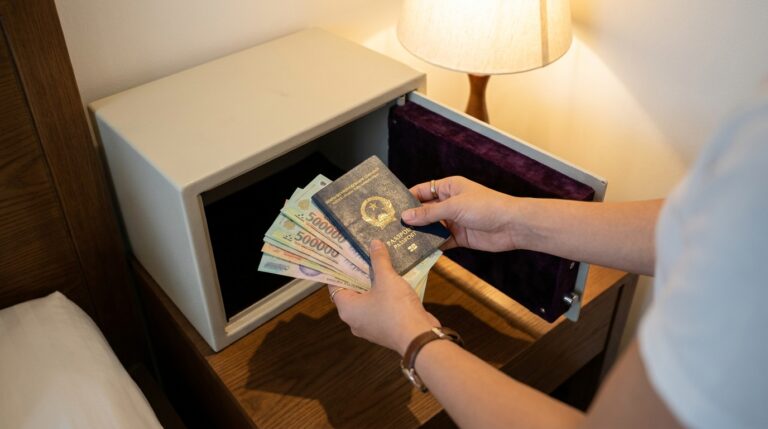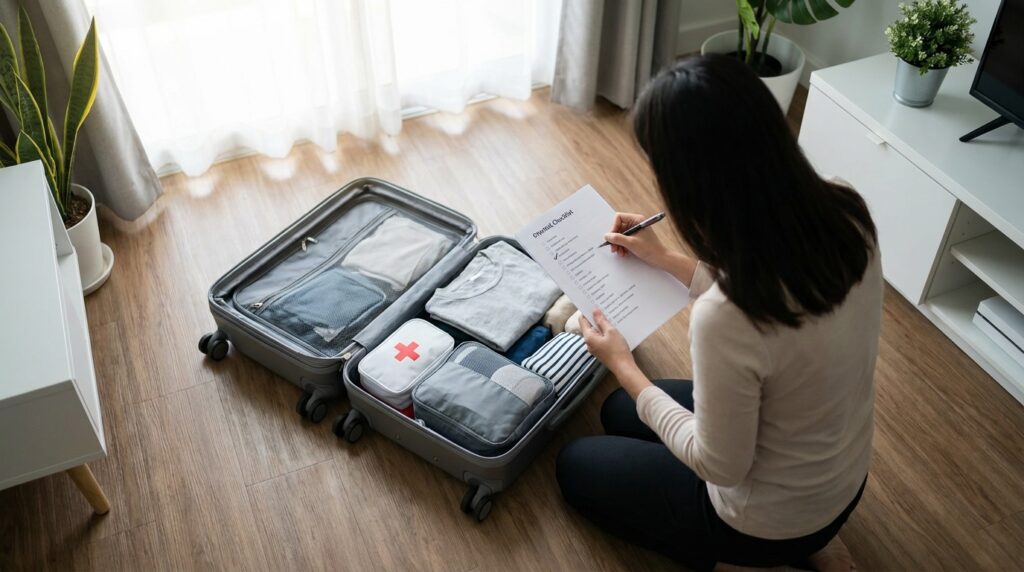
Before a first trip abroad, sort out five areas in this order: your passport, the entry rules for your destination, your health and insurance, your money and phone, and copies of your bookings. Most problems on a first international trip come from something that could have been checked at home weeks earlier. This checklist goes through each area and ends with a short list for the day before you fly.
Table Of Content
Check Your Passport Months Ahead
Look at your passport’s expiry date as soon as you start planning, because many countries want it to stay valid for some time after your trip ends. The US State Department notes that many countries require at least six months of validity left on entry, and some require more. Others ask for less. The UK government’s travel advice adds that some countries also want blank pages for entry and exit stamps.
These rules differ from country to country and they change, so do not rely on a friend’s experience or an old forum post. Check the official requirement for your destination, and for any country where you change planes. Airlines can refuse to let you board if your passport does not meet the rules.
If you need a new passport, apply early. Processing times vary through the year and are often longer before holiday seasons. Your passport office’s website shows current times.
Confirm Visa and Entry Rules on Official Sites
Find out whether you need a visa or an online travel permit by checking the official government website of the country you are visiting, along with your own government’s travel advice. Entry rules depend on your nationality, the length of your stay and the purpose of the trip, so the answer for one traveller may be different for another.
For US citizens, the State Department publishes a page for every country. For British nationals, the Foreign, Commonwealth and Development Office (FCDO) has an “entry requirements” section in its advice for each country. Many other countries run a similar service. Third-party visa websites sometimes charge extra fees for forms you could fill in yourself, so start from the government site.
Plan for Your Health
Book a visit with your doctor or a travel clinic at least a month before you leave if your destination may need vaccines or other health preparation. The CDC recommends this timing because many vaccines need time to work, and some need more than one dose.
Pack any regular medicines in your hand luggage, in their original boxes, with enough to cover a few extra days in case of delays. Some medicines that are normal at home are controlled in other countries. If you take prescription medicine, ask your doctor or pharmacist, and check your destination’s official rules before you go.
Travel Insurance
Get travel insurance that covers medical treatment for the whole trip, even if it is short. The FCDO advises this for every journey, and notes that insurance may not be valid if you travel against its advice. Read what the policy includes for medical care, cancellations and lost bags, and save the emergency phone number in your phone.
Sort Out Money Before You Leave
Take at least two ways to pay, such as a debit card and a credit card, plus a small amount of local cash for your first day. Card payments are common in many countries, but taxis, markets and small cafes sometimes take cash only.
Check your banking app or call your bank about using your cards abroad. Some banks ask you to set a travel notice, and many charge fees for foreign transactions or cash withdrawals, so it helps to know these before you arrive. Keep your bank’s overseas phone number somewhere other than your wallet in case your cards are lost.
Get Your Phone Ready
Ask your mobile provider what roaming costs at your destination before you leave, as charges outside your home country can be high. Many providers sell travel add-ons. Another choice is a local SIM card or an eSIM, which needs a phone that is unlocked and supports it.
Download offline maps for the cities you will visit, along with a translation app with the language pack saved to your phone. These keep working when you have no signal or are trying to save data. Turn off mobile data for apps that do not need it so they do not use your allowance in the background.
Keep Copies of Your Documents and Bookings
Make a paper copy and a digital copy of your passport’s photo page, your insurance policy and your main bookings. Store the digital copies somewhere you can reach from any device, and share them with someone you trust at home. If your passport is lost, a copy makes the report to the police and to your embassy much easier.
Write down the address of your first night’s accommodation on paper too. Border officers often ask where you are staying, and a dead phone battery is not a good answer.
US citizens can also enrol in the State Department’s Smart Traveler Enrollment Program (STEP), which sends safety updates from the nearest US embassy and helps the embassy contact you in an emergency. Other governments run their own alert services; check your government’s travel advice pages.
Pack the Small Things People Forget
A plug adapter is easy to forget, and you need one because plug shapes and voltages differ between countries. Check the plug type for your destination and whether your chargers work at its voltage; many phone and laptop chargers list the range they accept on the label.
Two weeks before you fly, put your passport, cards, adapter and medicines in one drawer, and do not move them until you pack.
The Day-Before Checklist
Run through this list the evening before you travel:
- Passport in your hand luggage, valid and matching the name on your ticket.
- Any visa or travel permit approved, printed or saved offline.
- Online check-in done and boarding pass saved to your phone.
- Two payment cards and some local cash.
- Insurance details and emergency numbers saved.
- Phone, charger, power bank and plug adapter packed.
- Medicines in your hand luggage, in original packaging.
- First night’s address written down.
- Route to the airport planned, with time for queues at security.
Leave for the airport earlier than you think you need to. International flights usually have earlier check-in and bag drop deadlines than domestic ones, so look up your airline’s cut-off times and arrive with time to spare.