Weekly meal planning means deciding, once a week, what you will eat for the main meals of the next seven days and writing one shopping list to match. It takes about 20 minutes once you are used to it, and it removes the daily “what’s for dinner?” question. This guide sets out a plain method anyone can follow, whether you cook for one or for a family.
Table Of Content
Why a Weekly Plan Helps
A weekly plan helps because it moves many small daily decisions into one short session. Instead of deciding at 6 p.m., tired and hungry, you decide on a calm afternoon with the fridge in front of you.
It also means fewer trips to the shop for one missing ingredient, and less food forgotten at the back of the fridge. Most households find that the plan does not need to be perfect to help. Even a rough list of five dinners is better than none.
Pick a Planning Day and Time
Choose one fixed day and time each week for planning, ideally the day before you do your main shop. Many people use Saturday or Sunday afternoon, but any day works if it is the same each week.
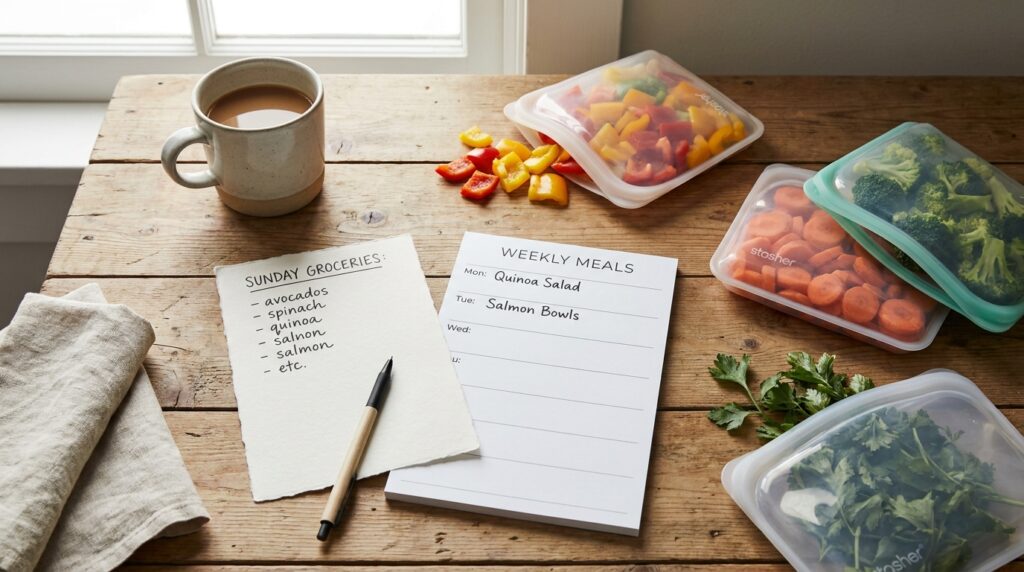
Keep the session short and tie it to something you already do, such as a weekend cup of tea. Have three things ready: your calendar for the week, a look inside the fridge and cupboards, and the list of meals your household actually likes.
Check What You Already Have
Start every plan by looking at what is already in the fridge, freezer and cupboards. Food that needs using soon goes into the first two or three days of the plan.
A half bag of spinach, some cooked rice or a few chicken thighs can become the base of a meal. Planning around these first is the simplest way to cut waste, and it often decides one or two dinners for you.
Use a Simple Template
A template makes planning faster because it gives each day a type of meal, so you only choose the details. Change the themes to suit your household.
| Day | Theme | Example |
|---|---|---|
| Monday | Use what is left from the weekend | Fried rice with leftover vegetables |
| Tuesday | Quick, 20 minutes or less | Omelette and salad |
| Wednesday | Cook once, eat twice | A big pot of lentil curry |
| Thursday | Leftovers from Wednesday | Curry with flatbread |
| Friday | Easy favourite | Homemade pizza or pasta bake |
| Saturday | Something new or slower | A recipe you have wanted to try |
| Sunday | Batch or roast | Roast vegetables and a tray bake |
Look at your calendar before filling in the days. On a late working night or a sports evening, plan the quickest meal or a leftover night. Save new or longer recipes for days when you have time.
Keep a list of meals that work
Write down every meal your household enjoys and can make without fuss, and keep the list on the fridge or in a notes app. When you plan, you pick from the list instead of starting from a blank page. Twenty to thirty dependable meals is enough to rotate for months.
Planning for one or two people
Planning for one or two people works the same way, with a few changes. Plan fewer separate dinners, perhaps four a week, and expect each recipe to cover two or three meals. Buy fresh food in smaller amounts, and lean on the freezer: cook a full recipe, eat one portion and freeze the rest in single boxes. After a few weeks you will have a small stock of ready meals for the nights you do not want to cook.
Write One Shopping List
Once the plan is set, write one shopping list from it, grouped by the sections of the shop you use. Grouping saves time in the aisles and makes it harder to forget something.
- Fresh produce
- Meat, fish or other proteins
- Dairy and chilled items
- Tins, jars and dry goods
- Frozen food
- Household items
Before you add an ingredient, check you do not already have it. Keeping a running list on the fridge during the week, where anyone can write down what has run out, makes this step quicker.
Cook Once, Eat Twice
Cooking a larger amount once and eating it on two days is the easiest way to save time in the week. Soups, stews, curries, chilli and pasta sauces all work well.
Plan at least one night a week as a leftovers night. It uses up what you cooked and gives you a night off from cooking.
Store leftovers safely. Cool them quickly and get them into the fridge within about two hours of cooking. The UK Food Standards Agency advises eating leftovers within two days, while the US Department of Agriculture gives three to four days. Follow the guidance where you live, and freeze anything you will not eat in time. Label frozen boxes with the dish and the date.
Keep the Plan Flexible
A meal plan is a guide, not a contract. Plans change when friends invite you out or a child is ill, so leave room to move meals around.
If a meal does not happen, swap it to another day or freeze the ingredients if they will not keep. Do not throw out the whole plan because one night changed. At the end of the week, look at what worked and what did not, then use that when you plan the next one.
After a few weeks, the habit gets faster. You will know which meals suit busy days, which ingredients you always run out of, and how much food your household really eats. That knowledge is what makes the 20 minutes each week pay off.