Five pantry staples cover a surprising number of quick meals: tinned tomatoes, dried pasta, tinned chickpeas, red lentils and tinned tuna. All five keep for months in a cupboard, cost little and cook in under half an hour. Add onions, garlic, oil, salt and a few spices, and you can make dinner on nights when the fridge looks empty.
Table Of Content
Why These Five Work Together
These five staples work because they cover the main parts of a meal between them: a sauce base, a carbohydrate and two or three kinds of protein. Tomatoes go with all of the others, and the chickpeas, lentils and tuna are easy to swap for each other in many recipes.
| Staple | Shelf life unopened (USDA guide) | Quick meal ideas |
|---|---|---|
| Tinned tomatoes | 12 to 18 months (high-acid) | Pasta sauce, shakshuka, soup |
| Dried pasta | Long-keeping dry goods; check the best-before date | Tomato pasta, tuna pasta, pasta e ceci |
| Tinned chickpeas | 2 to 5 years (low-acid) | Curry, roast chickpeas, hummus |
| Red lentils | Dry goods; check the best-before date | Dal, lentil soup, lentil ragu |
| Tinned tuna | 2 to 5 years (low-acid) | Tuna pasta, fishcakes, rice bowls |
The USDA’s figures for tinned food are about best quality, and it says tins kept in good condition in a cool, dry place stay safe for longer. Its advice is to store them below 85°F (about 29°C), away from the cooker and damp cupboards.
1. Tinned Tomatoes
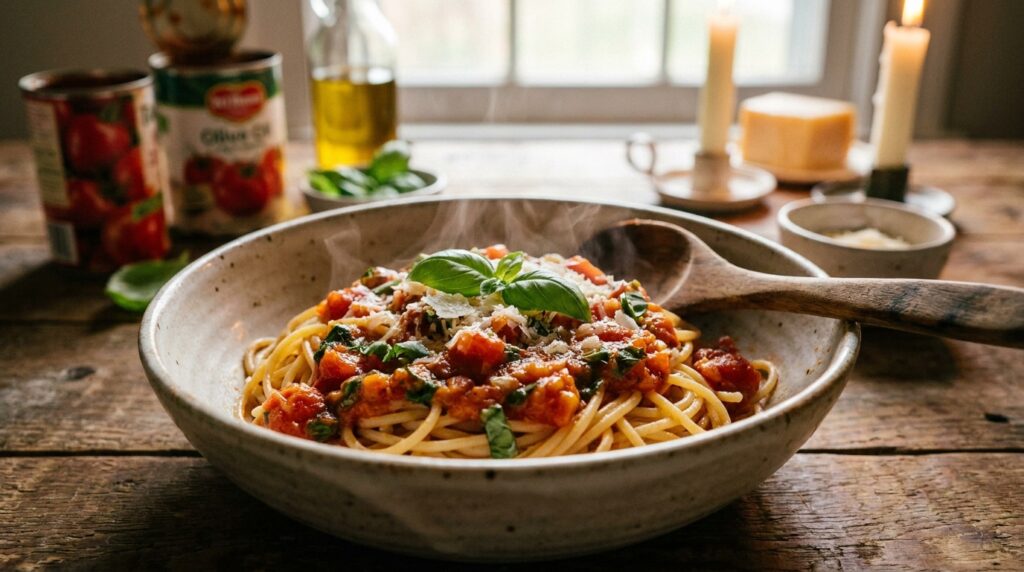
Tinned tomatoes are the base for a quick sauce that takes about 15 minutes. Soften a chopped onion and a crushed garlic clove in two tablespoons of olive oil, add a 400 g tin of tomatoes with a pinch of salt, and simmer until thick. Break up whole tomatoes with a wooden spoon as they cook.
That one sauce becomes several meals. Stir it through pasta, use it as a pizza topping on flatbread, or make shakshuka by making small wells in the simmering sauce, cracking in eggs and covering the pan until the whites set. Add stock and a little cream or milk to turn it into a quick tomato soup.
Whole and chopped tinned tomatoes both work in every idea here. Whole ones break down easily with a spoon, so buy whichever is cheaper on the day.
2. Dried Pasta
Dried pasta is the fastest filling base in the cupboard, ready in the time it takes to boil water and cook it for the minutes on the packet. Use plenty of water and salt it well, and save a mugful of the cooking water before you drain. A splash of that starchy water helps any sauce cling to the pasta.
Beyond tomato sauce, try pasta with garlic, olive oil and chilli flakes, or pasta e ceci, an Italian dish of small pasta cooked in a thick chickpea and tomato broth. Short shapes such as penne or fusilli hold chunky sauces well, while spaghetti suits thinner, oily ones.
3. Tinned Chickpeas
Tinned chickpeas are already cooked, so they only need draining, rinsing and warming through. That makes them one of the quickest proteins you can keep in a cupboard.
- Chickpea curry: fry onion, garlic and curry powder, add a tin of tomatoes and a tin of drained chickpeas, and simmer for 15 minutes. Stir in spinach or a spoonful of yoghurt at the end.
- Roast chickpeas: pat drained chickpeas dry, toss with oil, salt and paprika, and roast in a hot oven until crisp. Use them as a snack or on salads.
- Quick hummus: blend chickpeas with lemon juice, garlic, olive oil, salt and a spoonful of tahini if you have it, adding water until smooth.
Keep the liquid from the tin, called aquafaba, if you like baking. Whisked, it can stand in for egg whites in some recipes.
4. Red Lentils
Split red lentils need no soaking and cook faster than most dried beans and peas. The cooking guide on Lentils.org gives about 5 to 7 minutes for split red lentils to become tender, using roughly 3 cups of liquid to 1 cup of lentils. Keep simmering for longer and they break down into a thick, soft purée, which is exactly what you want for dal.
For a basic dal, fry onion, garlic, ginger, cumin and turmeric in oil, add 200 g of rinsed red lentils and about 750 ml of water, and simmer, stirring now and then, until thick. The same guide suggests adding salt after cooking. Eat it with rice or flatbread.
Red lentils also thicken soups and stretch a meat sauce. Add a handful to a pot of tomato soup or a bolognese and let them cook down; they add protein and body without much change to the taste.
Keep a spare of each staple at the back of the cupboard. When you open the spare, add it to your shopping list straight away.
5. Tinned Tuna
Tinned tuna turns a plain bowl of pasta or rice into a full meal in minutes. Stir it through tomato pasta with capers or olives, or mix it with mayonnaise, chopped onion and sweetcorn for sandwiches and jacket potatoes.
For simple fishcakes, mash cooked potato with drained tuna, spring onion, lemon zest, salt and pepper, shape into patties, coat lightly in flour and fry until golden on both sides. Tuna packed in olive oil has more flavour; tuna in spring water is lighter. Use whichever you prefer.
Storing Opened Tins and Checking Damaged Ones
Once a tin is open, move any leftovers into a glass or plastic container with a lid and put it in the fridge. The USDA says opened high-acid foods such as tomatoes keep for 5 to 7 days in the fridge, and low-acid foods such as chickpeas, beans and fish keep for 3 to 4 days. The transfer is mainly for flavour, as acidic food can pick up a metallic taste from the tin.
Check tins before you use them. The USDA advises throwing away any tin that is leaking, bulging or badly rusted, or that has a deep dent you can lay your finger into, and any tin that spurts liquid when opened or smells bad. A small dent on an otherwise sound tin is usually fine, but a sharp dent on the top or side seam can let bacteria in.
Keep dry goods such as pasta and lentils in their sealed packs or in airtight jars, in a cool and dry cupboard. Put new stock behind the old, so you always use the oldest packet first.