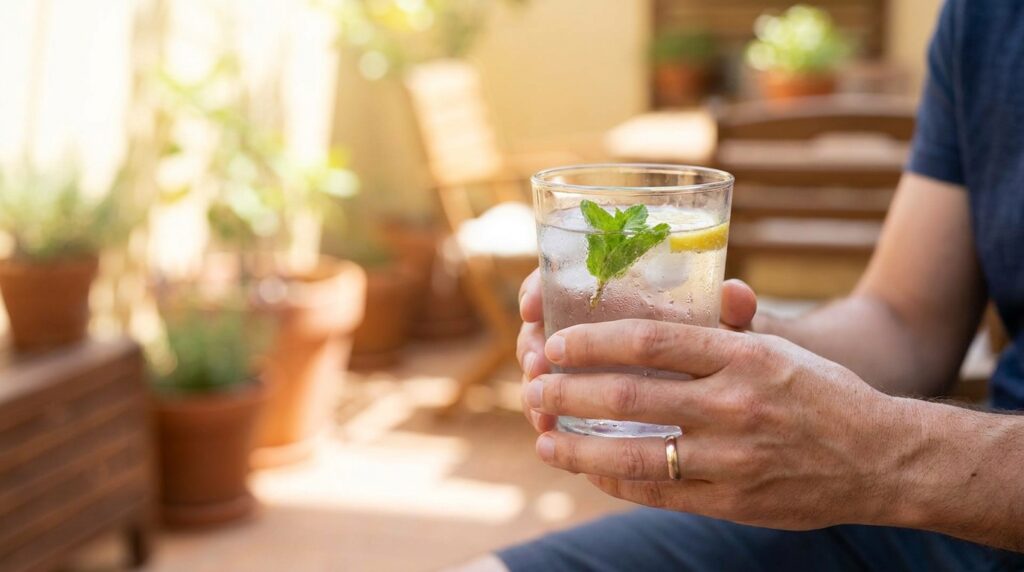
The NHS recommends drinking 6 to 8 cups or glasses of fluid a day, and you may need more in hot weather, when you are active or when you are unwell. Water, lower-fat milk, tea and coffee all count. This guide explains where that figure comes from, how to tell if you are drinking enough, and simple ways to drink more through the day.
Table Of Content
How Much Fluid Adults Need
For most adults, 6 to 8 cups or glasses of fluid a day is the everyday guide from the NHS. It is easy to remember and works well as a daily target.
Mayo Clinic refers to a fuller figure from the US National Academies of Sciences, Engineering, and Medicine: about 15.5 cups (3.7 litres) of fluid a day for men and about 11.5 cups (2.7 litres) for women. That total includes all drinks and the water in food, and about 20% of daily fluid usually comes from food. So the amount you need to drink is lower than the headline number suggests.
Both figures are general guides. Your own needs depend on your body size, how active you are, the climate you live in and your health.
What Counts Towards Your Daily Fluid
Most drinks count towards your daily fluid, not only plain water. The NHS lists water, lower-fat milk, tea and coffee as all contributing. Food adds fluid too, especially fruit and vegetables with a high water content.
| Drink | Counts as fluid? | Note |
|---|---|---|
| Water | Yes | The best everyday choice, with no sugar or calories |
| Lower-fat milk | Yes | The NHS includes it in daily fluid |
| Tea and coffee | Yes | The NHS advises having caffeine in moderation |
| Fruit juice and smoothies | Yes | The NHS suggests no more than 150ml a day, with a meal, because of the sugar |
| Sugary fizzy drinks | Yes | The NHS suggests swapping them for sugar-free options |
| Diluted squash or cordial | Yes | Dilute well to cut the sugar |
Signs You Are Drinking Enough
The simplest check is the colour of your urine. The NHS says most people should aim for pale, clear yellow urine through the day. Mayo Clinic adds that you are probably drinking enough if you rarely feel thirsty and your urine is colourless or light yellow.
Darker yellow urine, feeling thirsty often, or a dry mouth can be signs you need to drink more. Some foods and medicines change the colour of urine, so colour is a guide rather than a test.
When You Need More Water
You need more fluid when your body loses more water than usual. The CDC and Mayo Clinic both list similar situations.
- Hot or humid weather, and high altitudes.
- Exercise and physical work, before, during and after.
- Illness with a fever, vomiting or diarrhoea.
- Pregnancy and breastfeeding, which the NHS also lists.
Drinking a lot more than you need is rare for healthy adults. Mayo Clinic notes that it can lead to low sodium levels in the blood, a condition called hyponatremia, and that the risk is mainly seen in athletes during long, intense exercise. For everyday life, drinking regularly through the day and following your thirst works well.
If you exercise, Mayo Clinic advises drinking extra water before, during and after a workout. On hot days, carry water with you and drink small amounts often instead of waiting until you feel very thirsty.
Easy Ways to Drink More
The easiest way to drink more is to make water the drink that is always within reach. The CDC suggests carrying a reusable water bottle, choosing water when eating out and serving water with meals. The NHS advises drinking regularly through the day rather than all at once.
- Keep a filled bottle on your desk, in your bag or in the car.
- Drink a glass of water with every meal.
- Link a glass to a daily habit, such as straight after brushing your teeth in the morning.
- Add a slice of lemon or lime, as the CDC suggests, or a few mint leaves for flavour.
- Freeze water in a freezer-safe bottle for cold water through a hot day.
- Eat more fruit and vegetables with a high water content, such as cucumber, melon or oranges.
- Use a phone reminder for the first week or two until the habit sticks.
If you are not sure how much you drink now, keep a rough count for two or three days. Many people find they drink well in the morning and very little in the afternoon, and a simple count shows where to add a glass or two.
Fill a bottle in the morning and keep it where you can see it. A visible bottle is an easy reminder, and you can check how much you have had by the end of the day.
Choosing better drinks
Swapping sugary drinks for water is one of the simplest changes you can make. The NHS suggests choosing sugar-free drinks instead of sugary ones, picking lower-fat milk or unsweetened plant-based drinks, and diluting squash well. For children, the NHS says water and milk are the best drinks.
When to Talk to a Doctor
Talk to a doctor if you are always very thirsty, if your urine stays dark even when you drink more, or if you feel dizzy or confused. Seek help promptly if a child, an older person or anyone who is ill cannot keep fluids down.
If you have a long-term health condition, or a doctor has told you how much to drink, follow their advice rather than general guidelines. Some conditions and medicines change how much fluid a person should have. This article is general wellbeing information, not medical advice.