Key Takeaways
- Additional clues that suggest there are problems with ductwork or HVAC airflow include temperature differences, poor airflow, strange noises, dirt, and smells.
- A dirty filter, a shut register, or pieces of furniture obstructing a vent can all create minor problems that are relatively easy to fix.
- Leaks, separations, collapses, or poor insulation in the ductwork can make heating and cooling less efficient.
- A visible accumulation of dust close to a vent doesn’t necessarily mean the whole duct system needs to be cleaned.
- In the case of repeated occurrences, moisture, potential pest presence, or smells related to anything dangerous, a professional should be consulted.
Reliable airflow is essential in ensuring comfort from sweltering summer days in Sacramento County to the varying microclimates of Alameda and Contra Costa counties in any season. That’s because the air ducts are installed in hidden areas such as attics, about which people may learn an issue long before even noticing a sign of damage.
Table Of Content
- Why Air Duct Problems Are Easy to Miss
- Sign One: Some Rooms Stay Too Hot or Too Cold
- Start with these simple checks
- Sign Two: Energy Bills Rise Without a Clear Reason
- Sign Three: Dust Collects Around Vents
- Sign Four: New Odors or Unusual HVAC Sounds Appear
- Sign Five: Airflow Feels Weak or Inconsistent
- A quick room-by-room airflow checklist
- Repair, Cleaning, or HVAC Replacement?
- When to Call a Professional
- Small Clues Can Point to Bigger Comfort Problems
For homeowners who need local help with damaged connections, leaks, or restricted airflow, air duct repair in Sacramento, Alameda, Contra Costa County, CA, is offered by Home Safe Air Duct & Dryer Vent Cleaning. The company’s repair service focuses on inspecting ductwork for issues such as leaks, blockages, damage, sealing needs, and insulation concerns, making it a relevant local option for homes throughout Sacramento County, Alameda County, and Contra Costa County.
Why Air Duct Problems Are Easy to Miss
Ductwork aims to deliver the treated air discreetly and in a satisfactory manner, not to communicate its presence to the consumers. As such, an inconspicuous malfunction, such as a gap at a connection, damage to the flexible duct, or failure of the insulation, may not produce evident indications. However, the issue will demonstrate itself through complaints about bedrooms that do not seem as they should, or excessively long operation of the system or highly insufficient airflow in the room.
It is easy to put the blame on the thermostat, the furnace or the air conditioning for all comfort problems. Although those appliances come into consideration, analyzing the air flow and visible ducting may allow to identify the cause of the problem instead of jumping to the conclusion that a significant system replacement is required.
Sign One: Some Rooms Stay Too Hot or Too Cold
A room that always seems to be behind the rest of the house can indicate an airflow issue. Supply ducts may be blocked, disconnected, broken or improperly sized or installed. A problem with the return path of the air may also occur as much less air can flow back to the HVAC system.
Start with these simple checks
- Confirm that supply registers and return grilles are open and not covered by rugs, curtains, or furniture.
- Replace a visibly dirty HVAC filter according to the equipment manufacturer’s guidance.
- Compare airflow from the uncomfortable room with airflow from nearby rooms while the system is running.
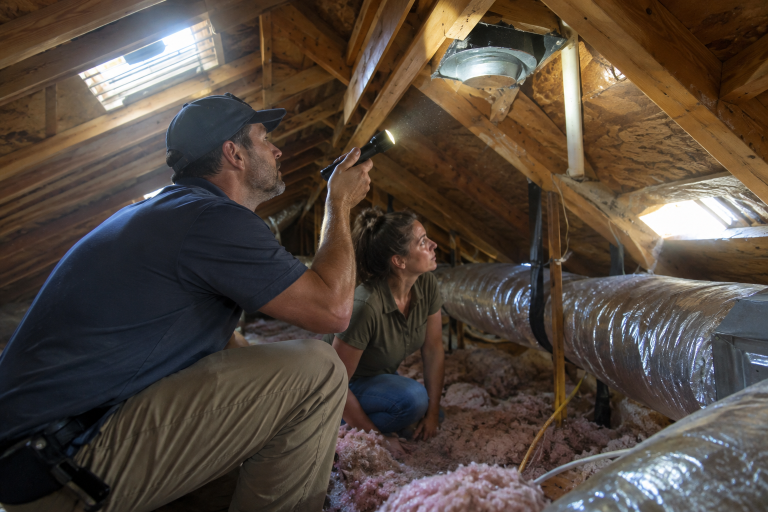
- Check accessible attic, garage, basement, or crawl-space duct sections for kinks, loose joints, or obvious damage.
If the problem remains after these checks, testing can help determine whether the issue is duct-related, equipment-related, or connected to insulation and sun exposure in that part of the home.
Sign Two: Energy Bills Rise Without a Clear Reason
Expensive energy bills can arise from many factors, such as climate fluctuations, thermostat adjustments, household activities, old equipment, and building insulation. Nevertheless, duct leaks in attics, crawl spaces, and other areas not suited for heating and cooling can cause the heating and cooling system to work longer in order to adjust to the thermostat setting. A similar issue can arise from damaged insulation in the ducts.
Before treating a bill increase as proof of a duct problem, compare similar billing periods and consider any changes in how the home was used. If comfort has also declined, duct leakage or insulation deserves a closer look. Homeowners considering efficiency improvements can review duct sealing and home energy upgrades, as well as other measures that may reduce heating and cooling demand.
Sign Three: Dust Collects Around Vents
Although finding dust near a register can be annoying, that is not the only reason for concern. Dust can accumulate due to various reasons including household activities, hair from pets, outdoor dirt, a dirty filter, and the airflow near the vent. Begin with cleaning the cover, and check if there is any need for maintenance of the filter.
Cleaning is advised when the ducts have too much dirt, there is evidence of contamination, a pest infestation is present, or dust particles are present at the registers. In spite of this, cleaning does not fix all the ductwork problems.
Sign Four: New Odors or Unusual HVAC Sounds Appear
While odors could possibly emanate from a forced-air system, the assembled ducts may not necessarily be the cause of the odors. Cooking, household pets, items stored near the air distribution unit, unclean air filters, and the sudden appearance of insects or moisture could lead to odorous situations as well. The musty smell may indicate that something is going wrong and the fault should be examined since this smell might arise due to moisture accumulating in the heating and ventilation channels, insulation, ductwork or parts of the HVAC system.
Ensure to listen for changes that occur once the system starts and stops working. A whistling sound might indicate that air is being forced through a narrow gap. If rattling sounds occur, then this can mean that the air distribution unit is faulty or not appropriately placed. A banging noise could refer to any loose ductwork or damper. The burning smell, electrical smells or smoke must be treated as a serious issue.
Sign Five: Airflow Feels Weak or Inconsistent
Weak airflow is often caused by a dirty filter, a blocked return, a closed damper, a disconnected duct run, or crushed flexible ductwork in a few rooms. Also bear in mind that more than one register must be checked before conclusions can be drawn. One weak vent may just have a local obstruction, while poor airflow throughout an entire house may involve a more extensive inspection of the HVAC system.
A quick room-by-room airflow checklist
- Allow the HVAC system to operate for a sufficient amount of time so that the airflow reaches its equilibrium.
- Go to every room of the house and see if the supply of air seem uniform in similar situations.
- Ensure that there are no obstructive furniture items to the return grille.
- Find the rooms that show the presence of abnormal air flow, temperature, smell, or sound.
- Look for access to the duct connections only when it is safe to get there.
Repair, Cleaning, or HVAC Replacement?
The methods being discussed here will solve different problems. Repairing can take care of loose connections, holes, damaged insulation, disconnected parts of ducts, and accessible crushed ducts. Cleaning should be considered in cases of the presence of excessive debris, confirmed contamination, pest activity, and particles that entered the living area. Replacement would be appropriate whenever duct has been seriously damaged, is not accessible, has been contaminated, or is poorly designed for the home.
While a new furnace or air conditioning unit is sometimes necessary, simply replacing the equipment without looking into duct performance may leave comfort issues unsolved. The inspection report should explain what was found, where it was found, and why this particular repair solution was given.
When to Call a Professional
- Multiple inspections reveal that the room in question continues to be uncomfortable.
- There is an overall lack of air circulation throughout a multitude of rooms.
- There are signs of visible moisture, water spots, potential mold, or pest presence.
- Ducts that are easily accessible have holes in them, been crushed, torn apart, or poorly insulated.
- The heating system is running for far too long a timespan without reaching the proper heat setting.
- It is impossible to inspect the attic or crawlspace because it is either too unsafe or hard to reach.
Small Clues Can Point to Bigger Comfort Problems
If there are inconsistently high or low temperatures, increased use of energy, dirty vents, certain smells, and poor airflow in the house, it does not always mean there is something serious to be done. All but the last condition should be taken seriously if it happens often or at the same time. This calls for conducting a careful assessment of the situation. After performing all possible checks, the homeowners will be able to make informed decisions as to what needs to be done next in the house: change the filter, remove the blockage, repair the spoiled part, or deal with moisture problems.